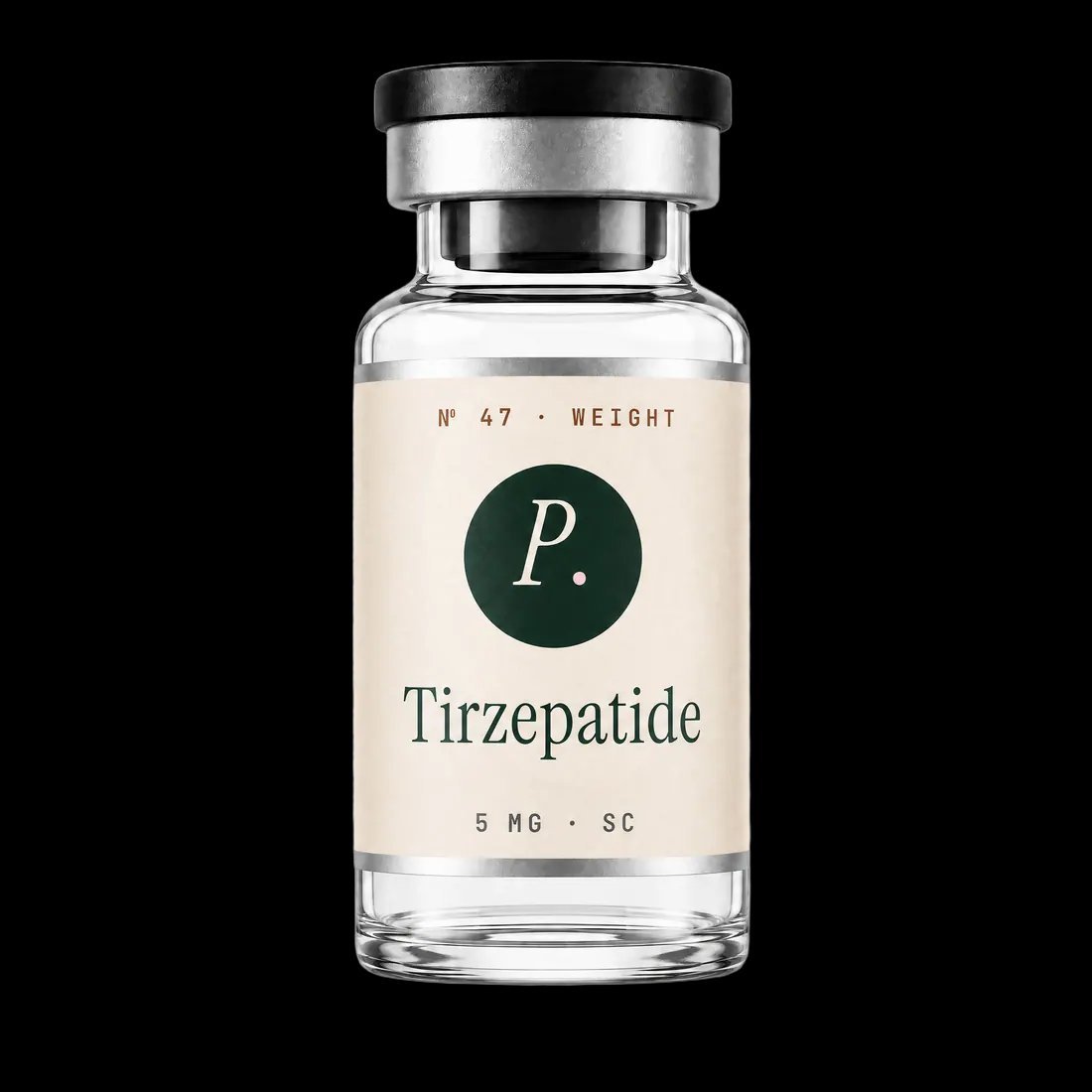
Description
Tirzepatide: Product & Research Information
Tirzepatide is a synthetic peptide-based medication that activates two important metabolic hormone receptors: the glucose-dependent insulinotropic polypeptide (GIP) receptor and the glucagon-like peptide-1 (GLP-1) receptor. This dual mechanism has made tirzepatide a significant development in research and clinical care involving type 2 diabetes, obesity, and related metabolic conditions.
Tirzepatide is the active ingredient in the prescription medicines Mounjaro and Zepbound in the United States. Its effects on glucose regulation, appetite-related signaling, food intake, and body weight have been investigated in extensive clinical trials. However, the approval of a specific prescription medicine does not mean that every product marketed as tirzepatide is approved, equivalent, or suitable for human use.
What Is Tirzepatide?
Tirzepatide is a synthetic, long-acting peptide designed to activate both GIP and GLP-1 receptors. These receptors respond to hormones involved in the body’s regulation of blood glucose and metabolism.
GIP and GLP-1 are known as incretin hormones. They are released in response to food intake and help coordinate physiological responses, including glucose-dependent insulin secretion. By activating both receptor pathways, tirzepatide combines two related but distinct biological mechanisms in a single molecule.
The compound is used in approved prescription medicines for specific indications, subject to the relevant country’s regulatory requirements. Its clinical evidence should be distinguished from claims made about unverified or independently marketed products.
How Does Tirzepatide Work?
Understanding tirzepatide begins with the two receptor systems it activates.
1. GIP Receptor Activation
Glucose-dependent insulinotropic polypeptide, commonly abbreviated as GIP, is an incretin hormone released by the intestine after eating.
GIP receptor signaling contributes to glucose-dependent insulin secretion and interacts with other pathways involved in energy metabolism. Tirzepatide activates this receptor as part of its dual-agonist mechanism.
The metabolic effects of GIP signaling depend on the biological context and its interaction with other hormonal pathways. Tirzepatide’s overall clinical effects cannot be attributed to GIP activity alone.
2. GLP-1 Receptor Activation
Glucagon-like peptide-1, or GLP-1, is another incretin hormone that plays an important role in post-meal glucose regulation.
GLP-1 receptor activation helps stimulate insulin secretion when blood glucose is elevated. It also influences appetite-related signaling and gastric emptying, which is the movement of food from the stomach into the small intestine.
This pathway is shared with other medicines, including semaglutide. Tirzepatide differs from a selective GLP-1 receptor agonist because it also activates the GIP receptor.
3. Why Dual Agonism Matters
Tirzepatide’s defining characteristic is the combination of GIP and GLP-1 receptor activation within one molecule. Researchers and clinicians study the combined pathway because glucose regulation, appetite, food intake, and body weight are influenced by multiple interconnected biological systems.
Clinical outcomes observed with tirzepatide reflect its overall pharmacological activity, the studied population, the treatment conditions, and other factors. The presence of two receptor targets does not, by itself, establish that a product will produce a particular result in an individual.
Tirzepatide and Metabolic Research
Tirzepatide has been investigated in clinical programs involving people with type 2 diabetes, obesity, and other metabolic or weight-related conditions. Studies have assessed measures such as glycated hemoglobin (HbA1c), body weight, glucose regulation, tolerability, and longer-term health outcomes.
Clinical trials have demonstrated improvements in blood glucose control in studied populations with type 2 diabetes. Separate studies have evaluated tirzepatide for chronic weight management in eligible adults when used alongside dietary changes and increased physical activity.
The results reported in clinical trials describe outcomes under defined study conditions. They should not be treated as a guarantee of an individual’s response or as proof that an independently sold product has the same quality and performance as an approved medicine.
Tirzepatide and Weight Management
Tirzepatide’s effects on body weight are associated with its influence on appetite-related pathways and food intake, alongside its broader metabolic activity. In clinical trials of eligible adults with obesity or overweight and a weight-related medical condition, prescription tirzepatide marketed as Zepbound demonstrated meaningful average weight reductions compared with placebo.
These findings support the approved indication for chronic weight management in the United States. They do not establish that every product carrying the tirzepatide name is approved for weight loss, nor do they guarantee any particular outcome.
Weight management is medically complex, and treatment suitability depends on an individual’s health status, medical history, other medicines, and professional assessment.
Tirzepatide and Type 2 Diabetes Research
Type 2 diabetes is characterized by problems with insulin action and blood glucose regulation. Tirzepatide’s dual GIP and GLP-1 receptor activity has been studied for its ability to improve glucose-dependent insulin secretion and support glycemic control.
The prescription medicine Mounjaro is approved in the United States to improve blood glucose control in eligible patients with type 2 diabetes, alongside diet and exercise. The approved labeling and eligible populations may vary by country and can change as new evidence is reviewed.
Tirzepatide is not a substitute for individualized diabetes care, and information about its biological mechanism should not be used to make treatment decisions independently.
Tirzepatide Compared With Semaglutide and Retatrutide
Tirzepatide is often discussed alongside semaglutide and retatrutide because all three are associated with metabolic hormone signaling. Their mechanisms differ.
- Semaglutide: Activates the GLP-1 receptor.
- Tirzepatide: Activates both the GIP and GLP-1 receptors.
- Retatrutide: Is an investigational triple agonist targeting GIP, GLP-1, and glucagon receptors.
This comparison describes their principal receptor targets; it is not a recommendation to use one compound over another. The approval status, clinical evidence, risks, and appropriate use conditions must be evaluated separately for each medicine.
Safety Information and Important Considerations
Approved tirzepatide medicines can cause adverse effects. Commonly reported effects include nausea, diarrhea, vomiting, constipation, abdominal discomfort, and other gastrointestinal symptoms. More serious risks and precautions are described in the official prescribing information.
U.S. prescribing information includes a boxed warning concerning thyroid C-cell tumors observed in rats. The relevance of this finding to humans is unknown. These medicines are contraindicated for people with a personal or family history of medullary thyroid carcinoma or with Multiple Endocrine Neoplasia syndrome type 2 (MEN 2).
Other warnings and precautions can include pancreatitis, gallbladder problems, dehydration-related kidney injury, hypoglycemia in certain treatment combinations, and delayed gastric emptying. Individual risk depends on the clinical context and the specific product labeling.
Tirzepatide should be used only under appropriate medical supervision when prescribed. This product information is not a substitute for the official prescribing information or advice from a qualified healthcare professional.
Product Identity, Quality, and Regulatory Status
The approval of Mounjaro or Zepbound does not confer approval on every vial, formulation, compounded preparation, or product advertised as tirzepatide.
Before making claims about a particular product, verify its regulatory status, source, labeling, manufacturing controls, and intended use. Where applicable, relevant documentation may include batch-specific analytical results, identity testing, purity data, and a certificate of analysis (COA).
A COA or stated purity percentage alone does not establish sterility, clinical equivalence, regulatory approval, or suitability for human administration. Claims about independent testing and product quality should be supported by authentic documentation for the actual batch.
Conclusion
Tirzepatide is a dual GIP and GLP-1 receptor agonist with an established role in specific approved prescription medicines. Its clinical research has advanced understanding of glucose regulation and weight management, while its safety profile and approved uses remain governed by official prescribing information and regulatory decisions.
Understanding its dual mechanism, clinical evidence, potential risks, and product-specific regulatory status is essential when evaluating information about tirzepatide.





Reviews
There are no reviews yet.