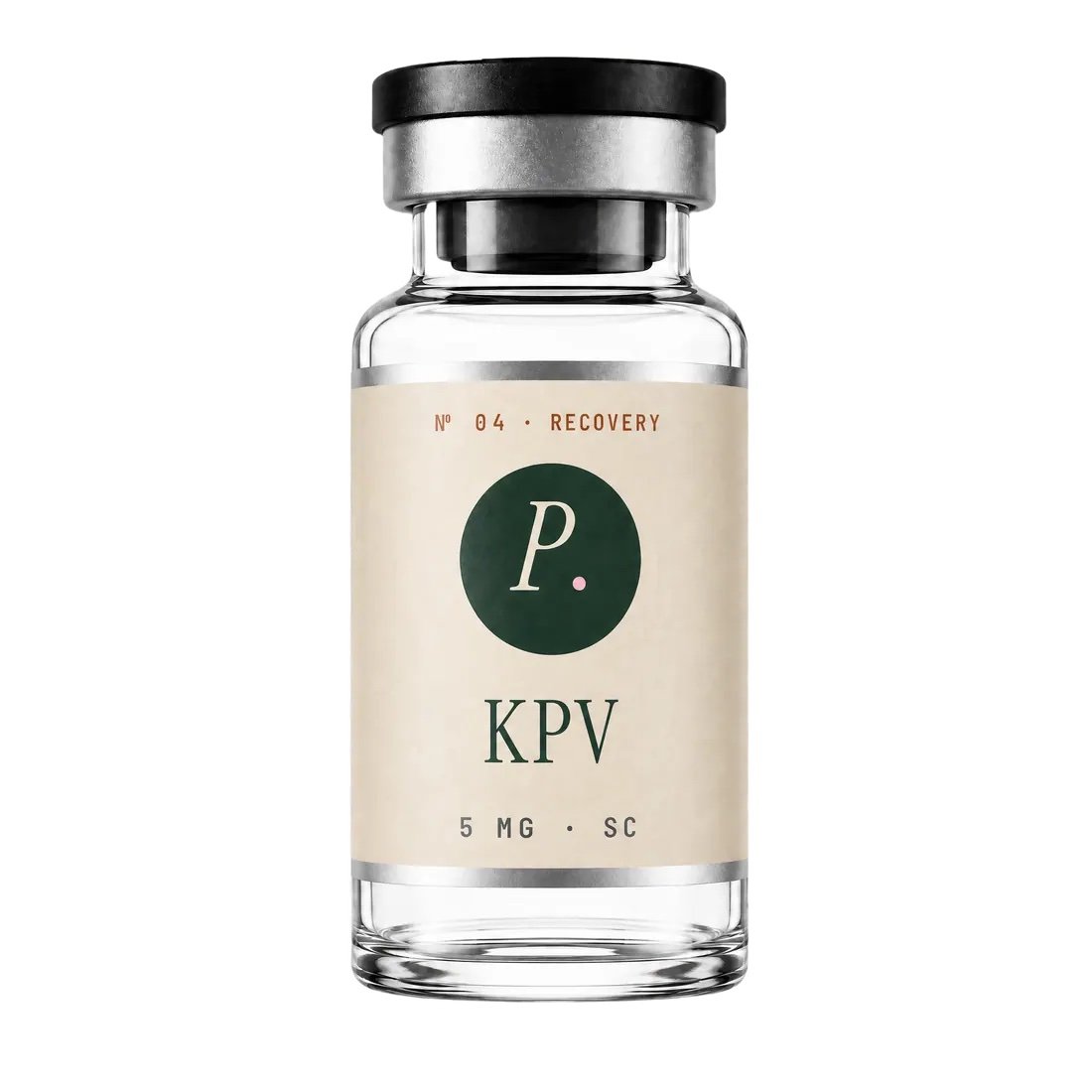
Description
KPV Peptide: Research Information & Product Overview
Product Overview
KPV is a short synthetic tripeptide made up of three amino acids: lysine, proline, and valine. Its sequence is commonly written as Lys-Pro-Val, and it corresponds to the three C-terminal amino acids of alpha-melanocyte-stimulating hormone (α-MSH).
KPV has attracted scientific interest because researchers have investigated its interaction with inflammatory signaling pathways, cellular responses, and intestinal biology. Its small, defined structure makes it a subject of interest in studies exploring how short peptides interact with cells and biological transport mechanisms.
For customers exploring KPV, understanding its molecular identity and research background is an important starting point.
What Is KPV Peptide?
KPV is a tripeptide, meaning it consists of three linked amino acids:
- Lysine (Lys or K): The first amino acid in the sequence.
- Proline (Pro or P): The second amino acid.
- Valine (Val or V): The third amino acid.
Together, these form the sequence Lys-Pro-Val, abbreviated KPV.
KPV is associated with alpha-melanocyte-stimulating hormone (α-MSH), a peptide involved in melanocortin biology. Although KPV corresponds to the final three amino acids of α-MSH, it is a distinct molecular fragment and should not be assumed to reproduce all the biological activities of the full-length hormone.
This distinction is important when evaluating published studies, product descriptions, and claims about biological activity.
KPV Research and Inflammatory Signaling
In laboratory experiments, researchers have investigated whether KPV influences pathways such as nuclear factor kappa B (NF-κB), which participates in the regulation of genes involved in cellular inflammatory responses. Studies using intestinal epithelial cells and immune-cell models have reported changes in inflammatory signaling and the release of certain inflammatory mediators.
These findings have contributed to interest in KPV as a research compound for studying how short peptides interact with inflammatory processes.
However, changes in signaling pathways observed in cell experiments do not establish that a compound will relieve symptoms or treat a disease in people. The effects may depend on the experimental model, concentration, biological environment, and formulation.
KPV and Intestinal Research
A published study examined KPV transport through PepT1, a transporter involved in the uptake of certain small peptides, and evaluated its effects in cellular systems and mouse models of chemically induced colitis. The researchers reported changes in inflammatory signaling and measures of intestinal inflammation.
This work provides a scientific basis for further investigation into KPV and intestinal biology. It does not establish that KPV is an effective treatment for inflammatory bowel disease, ulcerative colitis, Crohn’s disease, or other gastrointestinal conditions in humans.
The distinction between an experimental model and a clinical treatment is essential when interpreting these findings.
Why Is KPV of Scientific Interest?
KPV brings together several topics in peptide research:
- Short-peptide biology: Its three-amino-acid structure provides a defined molecular sequence for experimental investigation.
- Inflammatory signaling: Researchers have examined its effects on selected cellular signaling pathways.
- Peptide transport: Studies have investigated its interaction with PepT1 and related transport processes.
- Intestinal research: Preclinical experiments have explored its effects in models of intestinal inflammation.
Product Identity and Batch Documentation
When evaluating a KPV research product, customers should review the product label alongside any available documentation for the actual batch.
Relevant information may include:
- The stated compound identity and amino-acid sequence.
- The labelled quantity and specified chemical form.
- Manufacturer or supplier information.
- Batch or lot identification.
- Available analytical reports and the tests performed.
- Product-specific storage and handling instructions.
The exact chemical form matters.
Research Status and Regulatory Context
KPV remains investigational in the context of proposed therapeutic applications. In its 2026 review of KPV for possible use in compounded drug preparations, the US Food and Drug Administration reported that it had not identified human exposure data for KPV drug products and lacked important information needed to assess potential safety concerns.
In July 2026, an FDA advisory committee discussed KPV among several peptide substances considered for possible inclusion on a bulk-drug-substance list for certain compounding uses. An advisory committee recommendation is not itself FDA approval of a drug or authorization for a particular medical indication.
This page provides general scientific and product information. It does not establish clinical efficacy or recommend KPV for diagnosis, treatment, prevention, or self-administration.
Frequently Asked Questions About KPV
What is KPV peptide?
KPV is a short peptide consisting of lysine, proline, and valine, represented by the sequence Lys-Pro-Val. It is the C-terminal tripeptide of alpha-melanocyte-stimulating hormone and has been studied in cellular and animal research.
What is KPV studied for?
Published preclinical research has examined KPV in relation to inflammatory signaling, peptide transport, and experimental models of intestinal inflammation. These findings are research observations and do not establish that KPV treats a medical condition in humans.
Is KPV the same as alpha-MSH?
No. KPV is the three-amino-acid C-terminal fragment of alpha-MSH. The full-length hormone is a larger molecule with broader biological activity.
What is PepT1, and why is it relevant to KPV?
PepT1 is a transporter that helps cells take up certain small peptides. Researchers have investigated its role in KPV uptake in intestinal and immune-cell models. This is a mechanistic research finding, not proof of a therapeutic effect in people.
What should customers check in KPV product documentation?
Review the stated peptide identity, chemical form, labelled quantity, batch number, and available analytical reports.
Conclusion
KPV is a defined tripeptide with an emerging preclinical research profile spanning inflammatory signaling, peptide transport, and intestinal biology. Its molecular simplicity and experimental findings make it a subject of continued scientific interest, but clinical effectiveness and safety in humans remain unestablished.
For a well-informed product evaluation, customers should understand the compound’s identity, distinguish preclinical findings from clinical evidence, and review the documentation available for the specific batch.
Research-use notice: This page is provided for general scientific and educational reference. It is not medical advice and does not establish that the product is safe or effective for human use. Do not use research-supply products for self-treatment or as a substitute for professional medical guidance. Follow applicable laws and the product’s documented handling requirements.

Reviews
There are no reviews yet.