Description
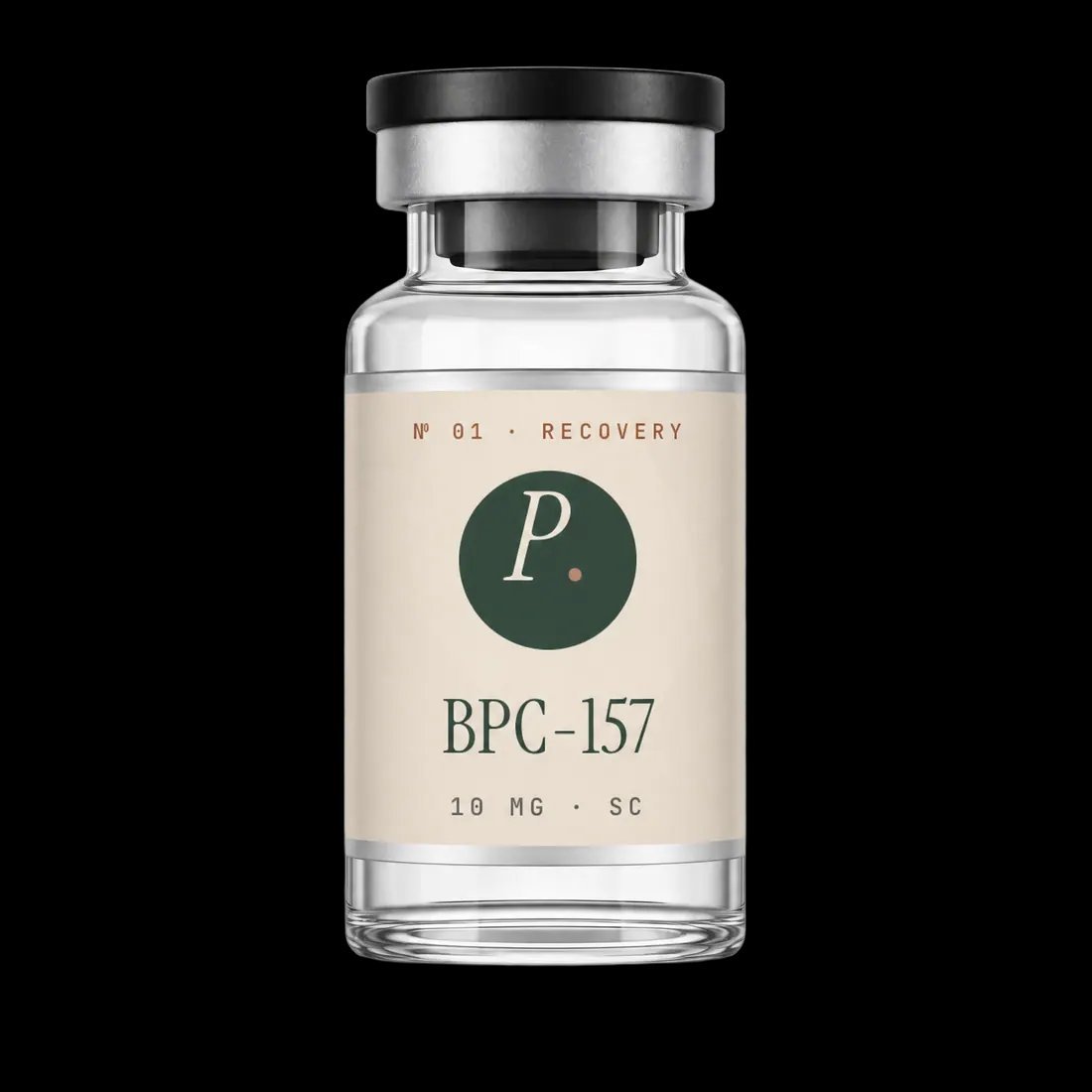
BPC-157 10 mg + TB-500 10 mg: Research Peptide Product Information
Product Overview
BPC-157 10 mg + TB-500 10 mg is a two-peptide combination presented for laboratory research involving peptide biology, cellular signaling, and processes investigated in preclinical tissue-repair models.
The product lists two components: BPC-157 at 10 mg and TB-500 at 10 mg. Although both compounds have attracted scientific interest in research related to tissue biology, their individual research findings do not establish the safety, effectiveness, stability, or compatibility of this combined formulation in humans.
This product description is intended to provide transparent scientific and product information for research contexts. It does not constitute medical advice or a recommendation for human or veterinary use.
Understanding BPC-157
BPC-157, also known as Body Protection Compound-157, is a synthetic pentadecapeptide consisting of 15 amino acids. It has been investigated primarily in preclinical studies examining biological signaling, gastrointestinal biology, vascular responses, and musculoskeletal tissue models.
Researchers have explored several proposed mechanisms, including pathways associated with nitric oxide signaling, angiogenesis, and cellular responses to tissue injury. However, observations in laboratory or animal models cannot establish that the same effects occur in humans or demonstrate a clinically meaningful benefit.
Human evidence remains extremely limited. A systematic review published in October 2026 identified three small human studies involving 30 participants across different settings. The authors judged the available evidence to be of very low certainty because of methodological limitations, potential bias, and imprecision.
Consequently, BPC-157 should be described as an investigational research peptide rather than a clinically established treatment for injuries, inflammation, gastrointestinal conditions, or other medical concerns.
Understanding TB-500
TB-500 is a name used in peptide research and commercial markets that requires careful identification. The U.S. Food and Drug Administration identifies TB-500 in its safety discussion as a fragment of thymosin beta-4, specifically the peptide sequence LKKTETQ.
Thymosin beta-4 is a naturally occurring protein studied in relation to actin binding, cellular migration, and various biological processes. Findings involving the full-length protein should not automatically be attributed to the shorter TB-500 fragment, because molecular identity can affect biological activity, pharmacology, and safety.
Research concerning thymosin beta-4 and related peptide fragments has explored cellular and tissue-related mechanisms. However, evidence involving a different molecular form does not establish the efficacy or safety of a product containing TB-500.
The FDA reports that it has not identified human exposure data for drug products containing the TB-500 fragment and highlights concerns involving potential immunogenicity, aggregation, and peptide-related impurities. These limitations should remain clear in any product information.
Why Researchers Examine These Peptides
BPC-157 and TB-500 have attracted attention in preclinical research because of their association with different biological mechanisms. Their appearance together in a product, however, does not demonstrate that they provide complementary effects or that combining them improves any research outcome.
Relevant scientific topics may include:
- Peptide structure, identity, and characterization.
- Cellular signaling pathways examined in controlled laboratory models.
- Experimental investigation of cellular migration and tissue-related biological processes.
- Analytical methods for evaluating peptide identity, purity, and related impurities.
- Formulation stability and compatibility research, where appropriate validated methods are available.
These topics describe areas of scientific investigation, not established benefits of the combined product. Claims about enhanced healing, faster injury recovery, pain relief, muscle growth, or treatment of disease should not be inferred from preclinical findings.
Product Composition
The product is listed with the following quantities:
| Component | Listed quantity |
|---|---|
| BPC-157 | 10 mg |
| TB-500 | 10 mg |
| Total listed peptide content | 20 mg |
The 20 mg total is the arithmetic sum of the two listed quantities. It does not establish the amount in any particular application, the concentration after preparation, the purity of either ingredient, or the amount of biologically active material in the finished product.
Buyers and research professionals should consult the actual product label and applicable analytical documentation for verified composition details. The precise identity of the TB-500 component should also be confirmed from the supplier’s documentation rather than inferred from the product name alone.
Quality, Testing, and Documentation
Reliable research depends on clear product identification, traceable sourcing, and appropriate analytical controls. Product quality should be evaluated using documentation that relates to the specific batch being supplied.
Where available and verifiable, relevant documentation may include:
- Batch-specific certificates of analysis (COAs).
- Analytical results supporting peptide identity.
- Reported purity results and the analytical method used.
- Information about related substances, impurities, and analytical limitations.
- Batch or lot identification and traceability information.
- Appropriate storage and handling information supported by product-specific stability data.
A reported purity percentage alone does not establish sterility, endotoxin control, absence of every contaminant, stability of the combination, or suitability for human administration. Likewise, separate test reports for BPC-157 and TB-500 do not independently verify the quality of the finished combined product.
Peptika should make claims such as “independently tested,” “HPLC-tested,” or “batch COA available” only when the corresponding evidence is available and applicable to the product being sold.
Safety and Regulatory Considerations
BPC-157 and TB-500 remain investigational substances, and the available evidence does not establish that this combination is safe or effective for human use.
The FDA has identified potential safety concerns associated with compounded products containing BPC-157 and TB-500, including immunogenicity concerns, peptide-related impurities, and limitations in the available human safety information. Regulatory status can differ by jurisdiction and product category, so local requirements should be checked rather than assuming that research availability means medical approval.
This product should not be represented as an approved medicine, a proven recovery treatment, or a substitute for established medical care. No human-use dosing, administration, or therapeutic recommendation can be inferred from the listed quantities.
Researchers should also distinguish research-grade material from products manufactured and authorized for clinical use. The intended research designation alone does not verify the quality characteristics of a particular batch.
Frequently Asked Questions
What is BPC-157 10 mg + TB-500 10 mg?
It is a two-component peptide product listing 10 mg of BPC-157 and 10 mg of TB-500. The listed quantities total 20 mg, but the product name alone does not verify composition, purity, or the quality of the finished formulation.
What is BPC-157 studied for?
BPC-157 has primarily been investigated in preclinical research involving biological signaling and tissue-related models. Human evidence is limited, and current studies do not establish a reliable clinical benefit or a well-characterized safety profile.
What is TB-500?
TB-500 is a commercial and research term that the FDA associates with a thymosin beta-4 fragment, LKKTETQ. It should not automatically be treated as interchangeable with full-length thymosin beta-4. The exact molecular identity should be verified using product-specific documentation.
Does combining BPC-157 and TB-500 make the product more effective?
There is insufficient robust human evidence to conclude that this particular combination is more effective than either component alone or that it provides a clinical benefit. Evidence about the individual peptides cannot establish the safety, effectiveness, or compatibility of the finished combination.
Does a 20 mg total mean the product has a verified 20 mg active content?
The listed quantities add up to 20 mg. Verified content and purity require suitable analytical evidence for the specific product or batch. The total listed amount is not itself a laboratory test result.
Is this product approved for human use?
This page does not establish approval for human use. BPC-157 and TB-500 are investigational substances, and regulatory requirements vary by jurisdiction. Customers should not interpret online availability or a research label as evidence of medical approval or suitability for human administration.
What documentation should researchers look for?
Where available, relevant records include a batch-specific certificate of analysis, peptide identity testing, reported purity with its analytical method, impurity information, traceability details, and appropriate storage or stability documentation. Claims should be checked against the actual records for the supplied batch.
Can this combination be used as a substitute for medical treatment?
No. The available evidence does not establish this product as a treatment for injury, pain, inflammation, or any other medical condition. Anyone seeking care for a health concern should consult a qualified healthcare professional.
Conclusion
BPC-157 10 mg + TB-500 10 mg brings together two investigational peptides that have attracted interest in preclinical scientific research. Their mechanisms and research histories are not evidence that the combined product delivers a proven benefit or has an established safety profile in humans.
For Peptika, the strongest product presentation is one built around accurate ingredient identification, transparent batch documentation, appropriately qualified scientific information, and clear research-use limitations. This approach supports informed evaluation without overstating what current evidence can demonstrate.
Research-Use Disclaimer
This product information is provided for scientific and educational context only. It is not medical advice, a diagnosis, or a recommendation for human or veterinary use. No claim is made that this combination is approved, clinically effective, sterile, or suitable for administration. Researchers are responsible for following applicable laws, institutional requirements, laboratory safety practices, and relevant regulatory guidance.


Reviews
There are no reviews yet.