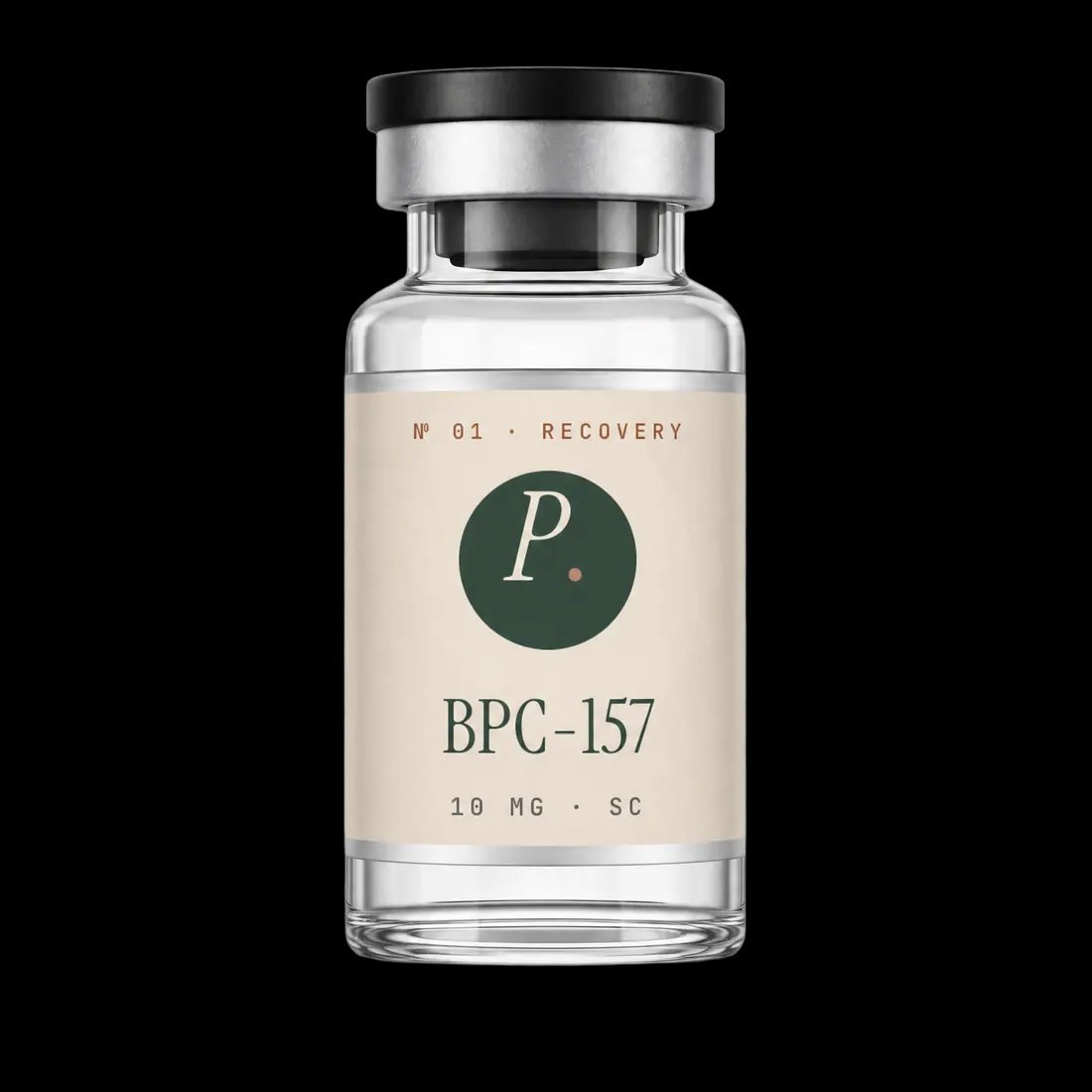
Description
BPC-157 10 mg + TB-500 10 mg + GHK-Cu 50 mg: Research & Product Information
Product Overview
The BPC-157 10 mg + TB-500 10 mg + GHK-Cu 50 mg listing brings together three distinct peptides or peptide-related compounds that have attracted scientific interest in areas such as cellular signaling, tissue biology, and experimental regenerative research.
Each ingredient has a different molecular identity and research history. BPC-157 is an experimental synthetic pentadecapeptide; TB-500 is a market name associated with a thymosin beta-4 fragment; and GHK-Cu is a copper complex of the tripeptide glycyl-L-histidyl-L-lysine.
This product page provides an informational overview of the listed composition, individual compounds, scientific context, and relevant quality considerations. It does not establish that the combined formulation is clinically effective, safe for human use, or suitable for any particular medical purpose.
Understanding the Three Compounds
BPC-157 — 10 mg
BPC-157 is a synthetic peptide consisting of 15 amino acids. It has been investigated primarily in preclinical models examining biological pathways associated with gastrointestinal biology, vascular signaling, and musculoskeletal tissues.
Although laboratory and animal research has generated hypotheses for further investigation, human clinical evidence remains extremely limited. A 2026 systematic review identified three small human studies with a combined total of 30 participants. The studies had substantial methodological limitations, and the overall certainty of evidence was rated very low.
Consequently, preclinical findings should not be interpreted as proof that BPC-157 heals injuries, repairs tendons, treats gastrointestinal conditions, or produces established benefits in humans.
TB-500 — 10 mg
TB-500 is a name used in the research-peptide market for a compound associated with a fragment of thymosin beta-4. The terminology matters: TB-500 is not automatically interchangeable with full-length thymosin beta-4, and product identity should be confirmed through appropriate analytical documentation.
Thymosin beta-4 and related fragments have been investigated in experimental research involving cellular movement, actin-related biology, and tissue responses. However, findings involving full-length thymosin beta-4 or other experimental preparations cannot automatically be attributed to every product marketed as TB-500.
The FDA reports that it has not identified human exposure data for drug products containing the thymosin beta-4 fragment identified as TB-500 in its safety review. Its concerns include potential immunogenicity, aggregation, and peptide-related impurities.
GHK-Cu — 50 mg
GHK-Cu is a copper complex of glycyl-L-histidyl-L-lysine, a naturally occurring tripeptide studied in connection with copper binding, skin biology, and cellular signaling.
Research involving topical cosmetic formulations has explored skin-related properties. However, evidence for a topical formulation does not establish the safety or effectiveness of an injectable product, nor does it establish the performance of a multi-compound research formulation.
The FDA has specifically raised concerns about injectable GHK-Cu, including potential immune reactions associated with aggregation or peptide-related impurities and the limited availability of human safety data.
Research Context: Why the Distinctions Matter
These compounds are often discussed together in online research-peptide content, but each has a different evidence base. Findings from laboratory experiments, animal models, topical cosmetic research, or studies of related molecules must be interpreted within the conditions in which they were obtained.
For this particular combination, several questions remain separate:
- Individual compound evidence: What has been observed for each compound in a specific experimental setting?
- Product identity and quality: Does analytical documentation confirm the identity, quantity, purity, and relevant quality attributes of the actual finished product?
- Combination compatibility: Have the three ingredients been evaluated together for stability, compatibility, and safety?
- Human clinical evidence: Are there adequate, well-controlled studies establishing the safety and effectiveness of this exact formulation for a defined indication?
Evidence for one ingredient does not answer the other questions. Research on the separate compounds is not proof that their combination provides additional, synergistic, or clinically meaningful benefits.
Listed Composition
| Listed ingredient | Label quantity |
|---|---|
| BPC-157 | 10 mg |
| TB-500 | 10 mg |
| GHK-Cu | 50 mg |
| Total of listed quantities | 70 mg |
The total of 70 mg is the arithmetic sum of the three quantities stated in the product name. It is not a dosing recommendation, a verified concentration, or independent confirmation of the product’s actual contents.
The product name alone does not establish the final formulation, excipients, stability, sterility, or analytical quality. These details should be confirmed using product-specific documentation where available.
Quality, Testing & Documentation
Reliable research documentation should identify the specific material tested and explain what the results establish. Where available and applicable, researchers should review:
- Identity testing: Evidence supporting the identity of each listed compound.
- Quantity or content analysis: Results showing the measured amount of each relevant ingredient.
- Purity and impurity information: Analytical findings and relevant limitations.
- Batch-specific documentation: A certificate of analysis (COA) linked to the actual lot or batch.
- Finished-product testing: Appropriate testing of the combined formulation, rather than relying exclusively on separate raw-material reports.
- Storage and handling information: Product-specific conditions supported by the supplier’s documentation.
A high-performance liquid chromatography (HPLC) result, where supplied, should be interpreted according to the method and sample tested. HPLC alone does not necessarily establish molecular identity, sterility, endotoxin status, or suitability for human administration.
Peptika should publish claims about independent testing, purity percentages, downloadable batch certificates, or other quality credentials only when current, verifiable documentation supports those claims.
Safety & Regulatory Considerations
BPC-157, TB-500, and injectable GHK-Cu should not be presented as established medical treatments on the basis of preliminary research or online claims. Their inclusion in a research-oriented product listing does not establish regulatory approval or suitability for human use.
The FDA has identified limited safety information and potential concerns involving immunogenicity and peptide-related impurities for these substances in the contexts described in its safety review. The absence of reported adverse events in a small study is not proof of safety.
The safety of this specific three-compound formulation cannot be inferred from research on its individual ingredients. This page is informational and does not provide medical advice, dosing, reconstitution, injection, or self-administration instructions.
Frequently Asked Questions
What is BPC-157 10 mg + TB-500 10 mg + GHK-Cu 50 mg?
It is a product listing that identifies three ingredients—BPC-157, TB-500, and GHK-Cu—with stated quantities of 10 mg, 10 mg, and 50 mg, respectively. Those label quantities do not independently verify the product’s contents or quality.
What are BPC-157, TB-500, and GHK-Cu?
BPC-157 is a synthetic 15-amino-acid peptide. TB-500 is a research-market name associated with a thymosin beta-4 fragment. GHK-Cu is a copper complex of a three-amino-acid peptide. Each has a distinct research history and should be evaluated separately.
Does scientific research prove that this combination promotes healing or recovery?
No. Preliminary findings for individual compounds do not establish that this exact combination improves healing, recovery, or any other health outcome in humans. Adequate clinical evidence for the finished formulation would be needed to support such claims.
Is this combination approved for human use?
This product description does not establish approval by the FDA or any other medicines regulator. Regulatory status depends on the specific product, jurisdiction, and authorized indication. Customers and researchers should consult the relevant regulator’s current information rather than infer approval from a product listing.
Does a COA prove that the finished combination is safe?
No. A COA can support specific conclusions about the sample and tests it covers. A report for one ingredient, or a report that does not identify the finished batch, does not by itself establish the quality, sterility, stability, safety, or clinical effectiveness of the combined product.
What does HPLC testing show?
HPLC is an analytical technique used to separate and measure components in a sample. Its conclusions depend on the method, reference standards, sample preparation, and interpretation. An HPLC result should not automatically be described as proof of sterility, complete identity confirmation, or suitability for human use.
Is this product intended for self-administration?
This page does not provide instructions or recommendations for self-administration. The listing should not be interpreted as confirmation that the product is approved, sterile, or safe for injection or other human use.
Conclusion
BPC-157 10 mg + TB-500 10 mg + GHK-Cu 50 mg combines three compounds with distinct identities and research backgrounds. The most informative product presentation is one that clearly explains the listed composition, distinguishes preliminary research from established clinical evidence, and makes product-specific quality documentation available when verified.
For Peptika Store, transparent ingredient information, accurate scientific language, and batch-specific documentation provide a stronger foundation for trust than unsupported promises about healing, recovery, or performance.
Research-use disclaimer: This page is provided for informational and research-literacy purposes only. It is not medical advice and does not establish that the product is approved or suitable for human or veterinary use. Do not use this description as a guide to dosing, reconstitution, injection, or self-administration. Always follow applicable laws, institutional requirements, and relevant safety procedures.


Reviews
There are no reviews yet.