Description
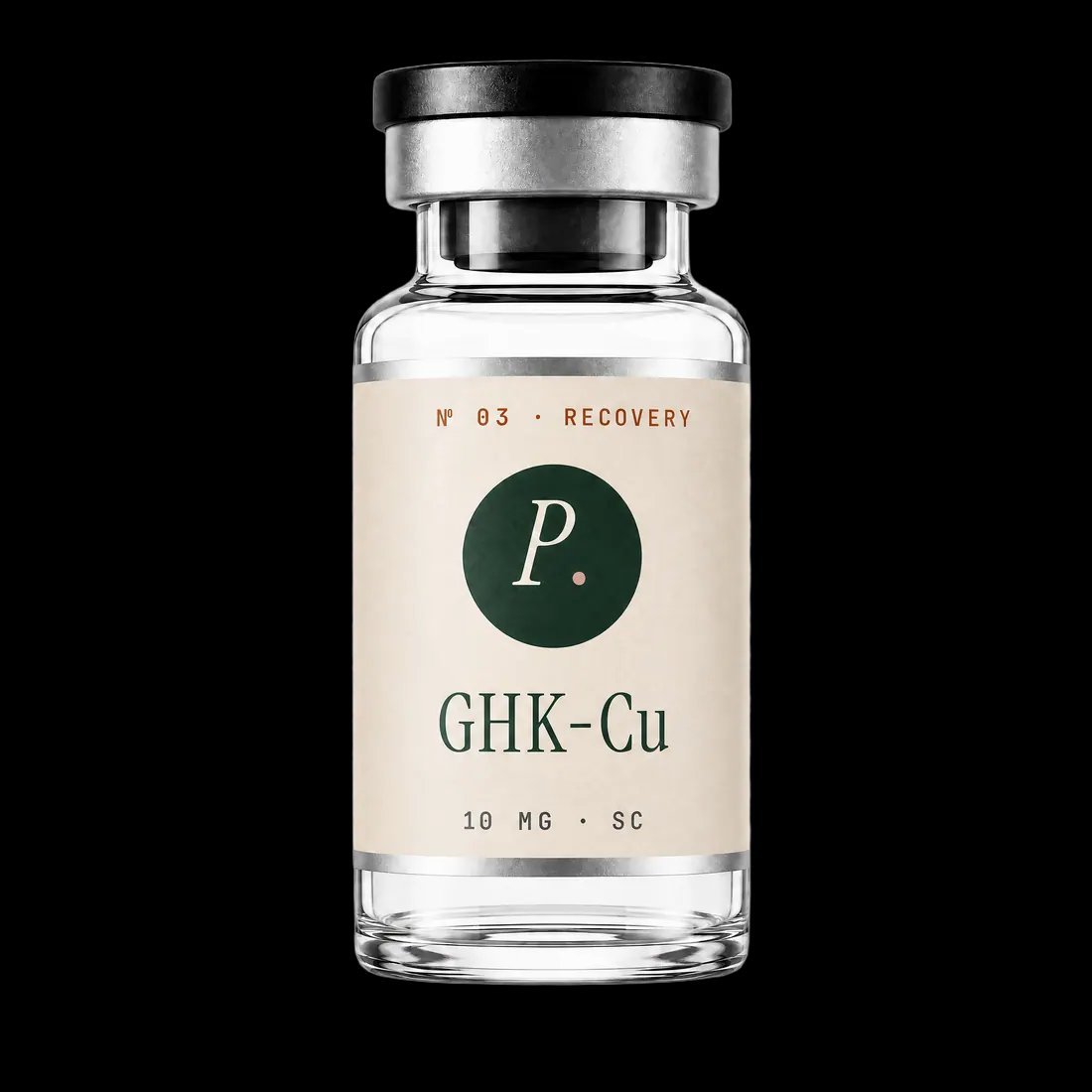
GHK-Cu: Research Peptide Product Information
Product Overview
GHK-Cu, also known as copper tripeptide-1, is a copper complex of the naturally occurring tripeptide glycyl-L-histidyl-L-lysine (GHK). It has been investigated in laboratory research and cosmetic science for its interactions with copper, extracellular matrix biology, cellular signaling, and skin-related processes.
GHK-Cu has attracted interest in studies examining collagen-associated pathways, skin appearance, oxidative processes, and tissue biology. However, much of the proposed biological activity comes from preclinical studies, while controlled human evidence remains limited and varies by formulation and intended use.
This page provides product and scientific background for research contexts. It does not establish that any particular GHK-Cu product is clinically effective, approved for medical use, or suitable for human administration.
What Is GHK-Cu?
GHK-Cu consists of the tripeptide GHK bound to copper(II). GHK contains three amino acids: glycine, histidine, and lysine. Its ability to coordinate copper is an important feature of its chemistry and contributes to the scientific interest in this peptide complex.
The chemical identity and behavior of GHK-Cu can depend on formulation, copper occupancy, solution conditions, stability, and the presence of other ingredients. For this reason, the name alone does not fully characterize the active chemical species or establish the quality of a particular product.
GHK-Cu is frequently discussed in cosmetic and research settings, but these contexts should not be conflated. Evidence for a topical cosmetic preparation cannot automatically be applied to a different formulation, concentration, delivery system, or route of administration.
Scientific Research Areas
Extracellular Matrix and Skin Biology
Researchers have investigated GHK-Cu in relation to extracellular matrix organization and biological pathways associated with collagen and other structural components of skin. Laboratory studies have explored changes in cellular signaling and gene-expression patterns under particular experimental conditions.
These findings provide hypotheses for further investigation. They do not, by themselves, demonstrate that a commercial product reduces wrinkles, repairs tissue, or produces a clinically meaningful cosmetic outcome.
Cellular Signaling and Oxidative Processes
GHK-Cu has been studied in experimental models involving inflammatory signaling, oxidative balance, and cellular responses to environmental or biological stress. The observed effects depend on experimental conditions, the formulation studied, and the model used.
Results from cell cultures or animal models should not be interpreted as evidence of a proven treatment effect in people. Further controlled studies are needed to determine which effects are reproducible, clinically relevant, and attributable to a well-characterized GHK-Cu formulation.
Cosmetic and Dermatological Research
Topical GHK-Cu formulations have been investigated for cosmetic endpoints related to skin appearance and texture. The available human literature is limited, and results cannot necessarily be generalized across products.
For example, a randomized study of topical copper tripeptide products following carbon dioxide laser resurfacing found no significant objective advantage over comparison products for the measured outcomes, despite differences in some participant-reported assessments. The study was small, with 13 participants completing follow-up.
More recent reviews likewise describe a gap between the substantial preclinical literature and the limited clinical evidence. Product formulation, delivery, study design, and the characterization of the copper-peptide complex are important limitations when evaluating the evidence.
Understanding the Evidence
The strength of evidence depends on what is being studied and how the product is used.
- Laboratory research: Can investigate molecular interactions, cellular pathways, and formulation characteristics.
- Animal and ex vivo research: Can explore biological responses in models that do not establish human clinical outcomes.
- Topical cosmetic studies: May provide information about a specific formulation and measured cosmetic endpoints, but findings may not apply to other products or routes.
- Clinical therapeutic evidence: Requires appropriately designed human studies demonstrating relevant outcomes and an acceptable safety profile for the specific product and intended use.
GHK-Cu should not be described as a clinically proven regenerative treatment, injectable anti-aging therapy, or established treatment for hair loss or wounds based solely on mechanistic studies or cosmetic marketing claims.
Product Identity and Composition
This listing is identified as GHK-Cu. No product strength, formulation, or route of administration is specified in the product name supplied for this page. These details should be taken from the actual product label and verified documentation rather than assumed.
When evaluating a GHK-Cu product, useful identity information may include:
- The full ingredient name and chemical identity.
- The stated quantity and unit, if supplied.
- The formulation and intended research context.
- The batch or lot identifier.
- Relevant analytical methods and batch-specific results.
- Storage and stability information supported by the product’s own documentation.
Because GHK-Cu is a copper-peptide complex, the total amount of peptide or copper reported by itself may not fully describe the chemical state of the material. Product-specific characterization is important when comparing research results or evaluating formulation quality.
Quality, Testing, and Documentation
Transparent documentation supports reproducibility and helps researchers evaluate what a product contains. Where available and verifiable, appropriate documentation may include:
- A batch-specific certificate of analysis (COA).
- Identity testing appropriate to the peptide complex.
- Reported purity and the analytical method used.
- Relevant information about impurities and degradation products.
- Characterization of copper content or coordination where applicable.
- Batch traceability and product-specific storage information.
- Stability data appropriate to the stated formulation.
A reported purity percentage alone does not establish the precise copper coordination state, stability, sterility, endotoxin control, or suitability for any particular route of administration. A COA should be reviewed for its scope, methods, results, and connection to the actual batch being supplied.
Peptika should describe a product as independently tested, HPLC-tested, or accompanied by a downloadable COA only when those statements are supported by the relevant product-specific evidence.
Safety and Regulatory Considerations
The safety profile of GHK-Cu depends on the formulation, exposure, route of administration, product quality, and intended use. Evidence from topical cosmetic products cannot establish the safety of injectable preparations.
The U.S. Food and Drug Administration has identified potential immunogenicity concerns for compounded injectable GHK-Cu because of possible aggregation and peptide-related impurities, alongside limited human safety data. This is an important limitation when evaluating claims about injectable products.
Regulatory status varies by jurisdiction and product category. The presence of a substance in research or cosmetic markets does not establish that a particular product is approved as a medicine or authorized for every intended use.
This product page is informational and does not provide medical advice, dosing instructions, administration directions, or a recommendation to use GHK-Cu for a health condition. Researchers should follow applicable laws, institutional requirements, and appropriate laboratory safety practices.
Frequently Asked Questions
What is GHK-Cu?
GHK-Cu is the copper(II) complex of the tripeptide glycyl-L-histidyl-L-lysine. It has been studied in laboratory research and topical cosmetic science for its interactions with copper, cellular signaling, and skin-related biological pathways.
What does GHK-Cu stand for?
GHK refers to glycyl-L-histidyl-L-lysine, a three-amino-acid peptide. The “Cu” denotes copper associated with the peptide complex.
What is GHK-Cu researched for?
Research has explored extracellular matrix biology, cellular signaling, oxidative and inflammatory processes, and topical cosmetic applications. The existence of this research does not establish that every proposed effect occurs in humans or that a particular commercial product delivers a clinical benefit.
Is GHK-Cu proven to reduce wrinkles or improve skin quality?
The evidence is limited and formulation-specific. Some small cosmetic studies have reported favorable findings, while other controlled research has not found significant objective differences for particular outcomes. The available evidence is insufficient to treat GHK-Cu as a universally proven cosmetic or medical intervention.
Is topical GHK-Cu evidence applicable to injectable GHK-Cu?
No. The route of administration can change exposure and safety considerations. Topical cosmetic evidence does not establish the safety, effectiveness, sterility, or quality of an injectable product. The FDA has specifically identified safety concerns and limited human safety information for compounded injectable GHK-Cu.
What documentation should researchers review?
Where available, researchers should review the batch-specific COA, identity and purity methods, impurity information, traceability, and product-specific storage and stability information. For a copper-peptide complex, additional characterization of copper content and chemical state may be relevant. Documentation should be assessed rather than assumed from a product listing.
Does a purity result prove that a GHK-Cu product is safe?
No. Purity is only one aspect of product characterization. It does not independently establish the absence of all impurities, the exact copper-peptide species, stability, sterility, endotoxin control, or suitability for a particular use.
Is GHK-Cu an approved treatment for hair loss, aging, or wound healing?
This page does not establish such approval. Research and cosmetic interest should not be confused with authorization or proof of therapeutic effectiveness. Regulatory status and permitted claims depend on the jurisdiction and the specific product.
Conclusion
GHK-Cu is a copper-peptide complex with a substantial preclinical research history and a more limited human evidence base. Its chemistry, formulation, and route of use are important to interpreting both research findings and safety information.
For Peptika, a strong GHK-Cu product page should prioritize accurate product identity, verifiable batch documentation, clear scientific context, and appropriately qualified claims. This provides useful information without overstating the clinical evidence or implying that different GHK-Cu formulations are interchangeable.
Research-Use Disclaimer
This page is provided for scientific and educational context only. It is not medical advice, a diagnosis, or a recommendation for human or veterinary use. No claim is made that a particular GHK-Cu product is approved, clinically effective, sterile, or suitable for administration. Product details and quality claims should be verified against the actual label and supporting documentation. Users are responsible for complying with applicable laws, institutional requirements, and relevant safety guidance.

Reviews
There are no reviews yet.