Description
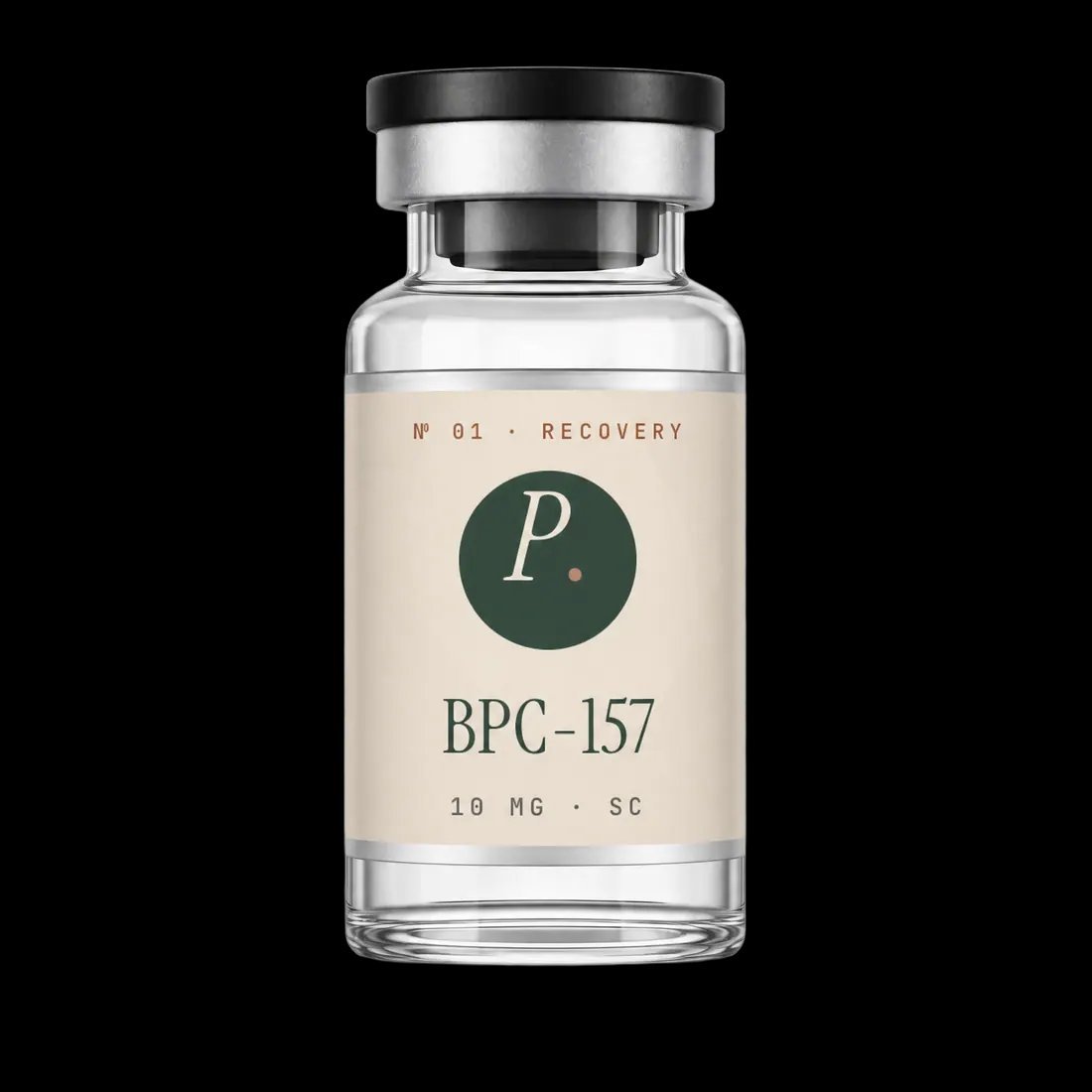
BPC-157 10 mg + TB-500 10 mg + GHK-Cu 50 mg + KPV 10 mg: Research & Product Information
Product Overview
BPC-157 10 mg + TB-500 10 mg + GHK-Cu 50 mg + KPV 10 mg is a four-peptide combination listing featuring compounds investigated in different areas of biological and pharmaceutical research. These include experimental peptide research, thymosin beta-4 fragment research, copper-peptide biology, and studies of inflammatory signaling.
Each ingredient has a distinct molecular structure and research profile. Although some laboratory and animal studies have explored biological processes involving tissue responses, cellular signaling, and inflammation, these findings do not establish that combining the four compounds produces a reliable or clinically meaningful effect in humans.
The listed product strengths are:
- BPC-157: 10 mg
- TB-500: 10 mg
- GHK-Cu: 50 mg
- KPV: 10 mg
These quantities are product-label information, not dosing instructions or evidence of an appropriate therapeutic amount.
Important research note: The safety, compatibility, stability, and clinical effectiveness of this specific four-peptide combination have not been established. Evidence relating to individual ingredients should not be interpreted as proof that the finished combination is safe or effective.
Understanding the Four Peptides
1. BPC-157: Experimental Peptide Research
BPC-157 is a synthetic peptide consisting of 15 amino acids. It has been investigated primarily in preclinical research involving biological responses associated with tissue, vascular, and gastrointestinal systems.
Researchers have explored its relationship with cellular signaling, vascular biology, and responses to experimental tissue injury. However, most findings come from animal studies, and the limited human literature does not provide sufficiently strong evidence to establish routine clinical use.
A 2026 systematic review of human evidence identified only three small studies involving a total of 30 participants across different clinical contexts. The review rated the overall certainty of evidence as very low because of methodological limitations, indirectness, and imprecision.
Consequently, BPC-157 should be described as an investigational peptide rather than a proven treatment for injuries, pain, inflammation, or tissue repair.
2. TB-500: Thymosin Beta-4 Fragment Research
TB-500 is commonly used to refer to a peptide fragment associated with thymosin beta-4 research. The U.S. Food and Drug Administration identifies the TB-500 fragment as LKKTETQ in its compounding safety materials.
Thymosin beta-4 is a naturally occurring protein involved in cellular processes that include actin regulation and cell migration. Research on thymosin beta-4 and its fragments has examined their possible roles in cellular movement and tissue-related biological processes.
An important distinction is that findings involving the full-length thymosin beta-4 protein cannot automatically be attributed to the shorter TB-500 fragment. Differences in molecular structure can affect biological activity, distribution, stability, and safety.
The FDA has reported that it has not identified human exposure data for drug products containing the TB-500 fragment and has raised concerns involving potential immunogenicity, peptide aggregation, and impurities.
3. GHK-Cu: Copper-Peptide Research
GHK-Cu is a copper complex of glycyl-L-histidyl-L-lysine, a tripeptide. It has been investigated for its interactions with copper-dependent biological processes, extracellular matrix biology, cellular signaling, and skin-related research.
The scientific literature includes laboratory and preclinical investigations involving matrix remodeling, oxidative processes, inflammation-related signaling, and cellular responses. Some human research has examined topical cosmetic applications, but such findings cannot establish the safety or effectiveness of injectable GHK-Cu.
The formulation and chemical state of GHK-Cu matter. Copper coordination, peptide identity, impurities, aggregation, and stability can influence the properties of a particular preparation.
The FDA has specifically raised concerns about compounded injectable GHK-Cu products, including possible immunogenicity associated with aggregation and peptide-related impurities, and limited human safety information.
Accordingly, research involving topical copper peptides should not be presented as evidence that a product containing GHK-Cu is safe or effective for injection.
4. KPV: Research on Inflammatory Signaling
KPV is a short tripeptide corresponding to the C-terminal region of alpha-melanocyte-stimulating hormone (α-MSH). It has been investigated in laboratory and animal models involving inflammatory signaling and related biological responses.
Preclinical research has explored KPV in models involving intestinal inflammation, epithelial biology, and inflammatory pathways. These investigations provide a basis for further scientific study but do not establish a proven treatment for inflammatory bowel disease, skin conditions, or other medical disorders.
The FDA has stated that it has not identified human exposure data for drug products containing KPV and lacks important information needed to evaluate potential safety issues.
Claims about human therapeutic effects, systemic anti-inflammatory benefits, or the safety of injectable KPV should therefore be avoided unless supported by appropriate evidence and authorization.
How Do the Four Compounds Differ?
Although the ingredients are sometimes grouped together in online peptide discussions, they should not be treated as interchangeable.
- BPC-157: Investigated mainly in preclinical studies of cellular and tissue-related responses.
- TB-500: A thymosin beta-4 fragment associated with research into actin-related cellular processes and cell migration.
- GHK-Cu: A copper-peptide complex studied in copper-dependent biology, matrix-related processes, and skin research.
- KPV: A short peptide studied primarily in laboratory and animal models involving inflammatory signaling.
Each compound has its own evidence limitations, chemical properties, and safety considerations. Their inclusion in one listing does not demonstrate that they share a common mechanism or produce a combined benefit.
What Is Known About the Four-Peptide Combination?
Research on the individual compounds does not establish the safety or effectiveness of this particular blend.
To substantiate claims about a combined formulation, product-specific evidence would be needed to address questions such as:
- Whether all four ingredients have been correctly identified.
- Whether the ingredients remain chemically compatible when combined.
- Whether the formulation maintains stability over its stated storage period.
- Whether the finished product has an adequately characterized impurity profile.
- Whether appropriate quality controls have been applied to the finished product.
- Whether the combination has been evaluated for relevant safety risks.
- Whether controlled clinical studies support any proposed human use.
Separate analytical reports for individual raw materials do not automatically establish the quality or stability of a mixture containing all four compounds.
Similarly, a plausible biological explanation for each ingredient does not demonstrate that combining them produces greater benefits, fewer adverse effects, or a predictable response in humans.
Product Strengths and Identification
The listing states the following ingredient quantities:
| Ingredient | Listed quantity |
|---|---|
| BPC-157 | 10 mg |
| TB-500 | 10 mg |
| GHK-Cu | 50 mg |
| KPV | 10 mg |
| Total listed ingredient mass | 80 mg |
The total of 80 mg is simply the arithmetic sum of the four stated quantities. It does not establish the final product’s concentration, formulation characteristics, or suitability for any particular use.
The product label and supplier documentation should confirm the exact identity and chemical form of each ingredient. This is particularly important for TB-500, because the name is used in the marketplace with varying descriptions, and for GHK-Cu, where the copper-peptide complex and its formulation characteristics matter.
Do not imply that the product is pharmaceutical-grade, sterile, injectable-grade, or clinically validated unless the relevant claims are substantiated by appropriate evidence.
Product Quality and Documentation
Accurate product identification and appropriate quality documentation are essential when evaluating a multi-ingredient peptide product.
Relevant documentation may include:
- Ingredient identity: Analytical evidence supporting the identity of each stated peptide or peptide complex.
- Batch-specific testing: Records that correspond to the actual batch being supplied.
- Purity and impurities: Analytical results describing the measured purity and relevant impurities of the ingredients and finished formulation.
- Formulation compatibility: Evidence addressing whether the four components remain compatible in the stated preparation.
- Stability information: Data supporting the claimed shelf life and storage conditions.
- Copper-complex characterization: Appropriate analytical information supporting the identity and characteristics of the GHK-Cu component.
- Sterility and endotoxin testing: Appropriate validated results when a sterile product is claimed or relevant to the proposed route.
- Manufacturing records: Documentation consistent with the product’s actual manufacturing and regulatory status.
A certificate of analysis (CoA) should be reviewed for its batch identifier, test methods, results, and issuing laboratory. A CoA alone does not prove clinical safety, effectiveness, sterility, or regulatory approval.
For a four-component formulation, documentation should address the finished product where relevant, not merely provide separate certificates for the starting ingredients.
Safety and Regulatory Considerations
BPC-157, TB-500, GHK-Cu, and KPV have different research histories, but important uncertainties remain regarding the safety of several of these substances when administered as drug products.
The U.S. FDA has identified concerns involving BPC-157, including limited safety-related information and potential immunogenicity and peptide-related impurities. For the TB-500 fragment, the agency has noted the absence of identified human exposure data for drug products containing the fragment and concerns involving aggregation and impurities.
For injectable GHK-Cu, the FDA has raised concerns about potential immunogenicity and limited human safety information. For KPV, the agency has stated that it has not identified human exposure data for drug products containing the substance.
These FDA assessments concern specific drug substances and compounding contexts; they should not be misrepresented as proof that every conceivable formulation has the same risk. Equally, a change in an advisory committee recommendation or a compounding-list status would not by itself establish that a product is FDA-approved or proven effective.
The regulatory status of the four-peptide combination must be evaluated separately from the status of each individual ingredient. Requirements may differ across countries and according to whether a product is marketed as a medicine, cosmetic, research material, or another category.
Important safety note: The listed quantities are not dosing instructions. The combination should not be presented as a proven treatment for injury recovery, skin rejuvenation, inflammation, or other medical conditions. Research-grade material should not be assumed suitable for human administration. Consult qualified professionals and verify applicable regulatory requirements before making decisions involving peptide products.
Frequently Asked Questions
What is BPC-157 10 mg + TB-500 10 mg + GHK-Cu 50 mg + KPV 10 mg?
It is a four-ingredient product listing containing the stated quantities of BPC-157, TB-500, GHK-Cu, and KPV. The listed amounts do not establish the product’s clinical effectiveness, quality, safety, or recommended use.
What is this four-peptide blend researched for?
The individual ingredients have been investigated in different areas, including cellular and tissue-related responses, actin-related processes, copper-peptide biology, and inflammatory signaling. However, these research areas do not establish that the four-ingredient blend is an effective treatment for any condition.
Is the combination proven to improve recovery or tissue repair?
No. Preclinical findings involving individual ingredients do not establish that the finished combination improves human recovery or tissue repair. Stronger product-specific and clinical evidence would be needed to support such a claim.
What is the difference between TB-500 and thymosin beta-4?
TB-500 is commonly associated with a shorter fragment of thymosin beta-4, identified by the FDA as LKKTETQ. The fragment is not the same as the full-length protein, and findings involving one should not automatically be applied to the other.
Is GHK-Cu the same as a topical copper peptide serum?
Not necessarily. GHK-Cu is a copper-peptide complex, but a topical cosmetic formulation and a different formulation containing the same named compound may have different properties, delivery characteristics, and safety considerations. Evidence from topical cosmetic products does not establish the safety or effectiveness of injectable preparations.
Is KPV clinically proven to treat inflammation?
No established clinical evidence demonstrates that KPV is a proven treatment for inflammatory conditions in humans. Much of the research is preclinical, and the FDA has stated that it has not identified human exposure data for drug products containing KPV.
Are the four peptides proven to work better together?
No. The safety, compatibility, and effectiveness of this particular combination have not been established. Research on each ingredient individually does not prove synergy or an improved outcome when they are combined.
What does the total of 80 mg mean?
It is the arithmetic sum of the four listed ingredient quantities: 10 mg of BPC-157, 10 mg of TB-500, 50 mg of GHK-Cu, and 10 mg of KPV. It is not a recommended dose or evidence of a particular concentration or administration schedule.
What documentation should be checked for this product?
Relevant documentation includes ingredient identity, batch-specific analytical results, purity and impurity information, chemical-form identification, finished-product compatibility and stability evidence, and any applicable sterility or endotoxin testing. The scope of the documentation should match the claims being made.
Is the combination FDA-approved?
The combination should not be described as FDA-approved unless a specific authorization for that finished product can be verified. The regulatory status of each individual ingredient is not equivalent to approval of a four-peptide formulation.
Conclusion
BPC-157 10 mg + TB-500 10 mg + GHK-Cu 50 mg + KPV 10 mg brings together four compounds with distinct structures and research profiles. While each has attracted scientific interest, the evidence varies substantially, and important human safety and formulation questions remain unresolved.
The key consideration is that research on individual ingredients does not establish the quality, compatibility, stability, safety, or clinical effectiveness of the finished blend.
Peptika should present the product’s stated composition transparently and ensure that any claims about ingredient identity, purity, testing, or product characteristics are supported by appropriate documentation.
Disclaimer: This content is for general educational and product-information purposes only. It is not medical advice and does not diagnose, treat, cure, or prevent any disease. The stated quantities are product-label information, not dosing recommendations. The safety and effectiveness of this four-peptide combination have not been established. Regulatory requirements vary by jurisdiction. Research materials should not be assumed suitable for human administration.

Reviews
There are no reviews yet.