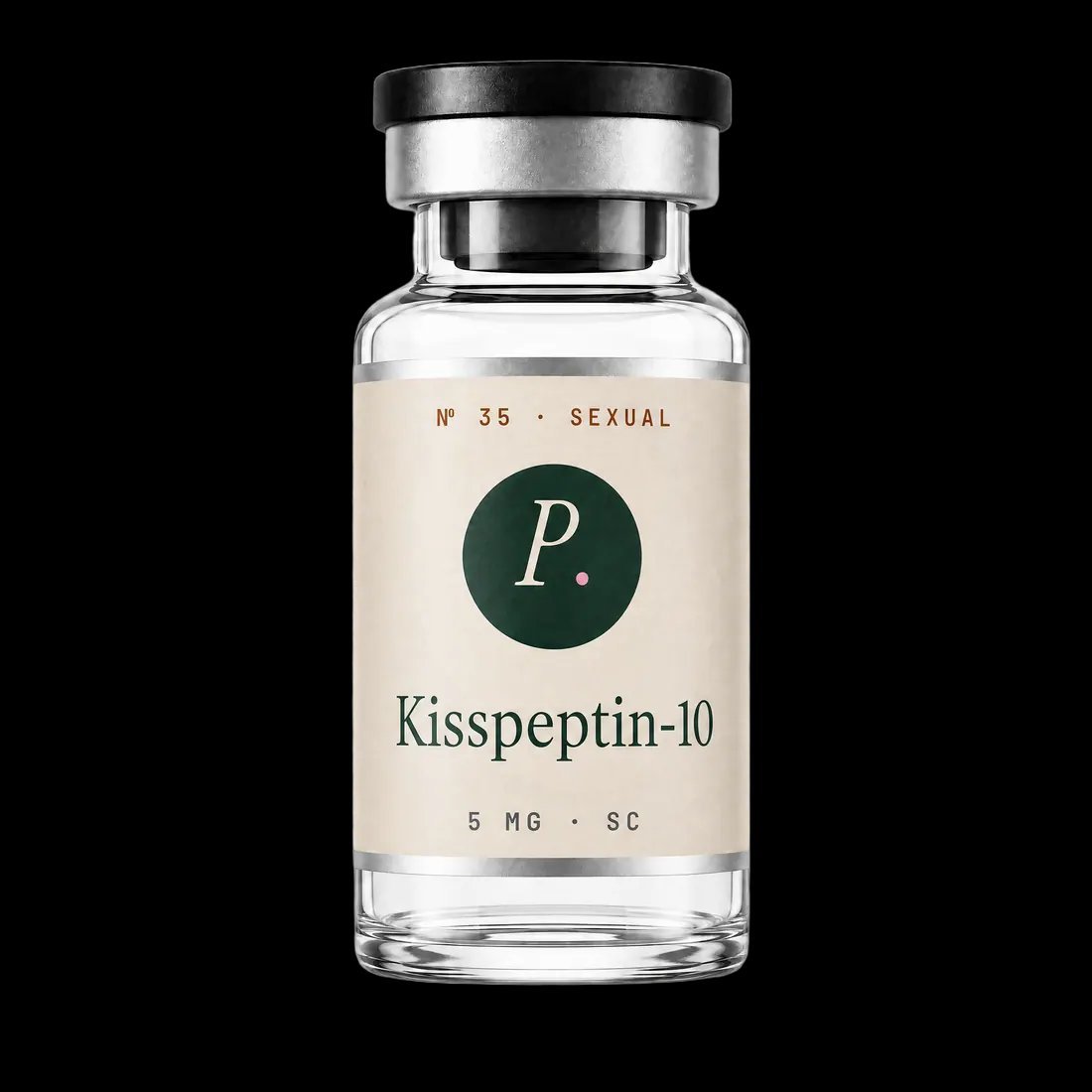
Description
Kisspeptin-10: Product & Research Information
Overview
Kisspeptin-10 (KP-10) is a synthetic peptide fragment of kisspeptin, a signaling molecule involved in regulating the reproductive endocrine system. It consists of ten amino acids and has been studied for its interaction with the kisspeptin receptor, also known as KISS1R or GPR54.
Kisspeptin-10 is of scientific interest because of its role in the hypothalamic-pituitary-gonadal (HPG) axis, a hormone-signaling system that helps regulate reproductive function.
Mechanism of Action
Kisspeptin-10 activates KISS1R, a receptor involved in signaling to gonadotropin-releasing hormone (GnRH) neurons in the hypothalamus. This pathway can stimulate GnRH release, which in turn influences the secretion of luteinizing hormone (LH) and follicle-stimulating hormone (FSH) from the anterior pituitary gland.
These hormones contribute to the regulation of reproductive processes and sex-hormone production. Researchers study kisspeptin signaling to better understand the communication between the brain, pituitary gland, and reproductive organs.
The resulting hormonal response can depend on factors such as the research protocol, exposure pattern, and individual physiology. A demonstrated biological mechanism does not, by itself, establish a safe or effective treatment.
Scientific Research Areas
Kisspeptin-10 has been investigated in several areas of reproductive and endocrine research, including:
- Reproductive hormone signaling: Examining the relationship between kisspeptin, GnRH, LH, and FSH.
- Hypothalamic-pituitary-gonadal axis: Studying the signaling pathways that coordinate reproductive endocrine activity.
- Endocrine physiology: Investigating how upstream hormonal signals influence downstream hormone secretion.
- Reproductive health research: Exploring kisspeptin pathways in the context of selected reproductive and endocrine conditions.
Human studies have reported hormonal responses following kisspeptin administration, but much of the research is exploratory and involves relatively small study groups. These findings should not be interpreted as proof of established clinical benefits for fertility, testosterone optimization, or other consumer health goals.
Safety and Regulatory Considerations
Kisspeptin-10 is not an FDA-approved drug ingredient, according to the FDA’s 2024 evaluation of the substance. The agency reviewed its proposed use in compounded products and identified concerns relevant to its quality, safety, and effectiveness. Regulatory status may differ by jurisdiction, so the specific product and intended use should be checked with the relevant authority.
The long-term safety profile of Kisspeptin-10 has not been established sufficiently to support broad claims about its safety for personal use. Research involving hormone signaling should not be treated as a recommendation for unsupervised administration.
Products sold online may vary in identity, concentration, formulation, manufacturing quality, and storage conditions. A product’s name or advertised purity does not establish that it is suitable for human administration or authorized as a medicine.
Product Documentation
Where genuine documentation is available, relevant information may include the stated chemical identity, batch-specific analytical results, impurity information, and details of the testing laboratory.
Documentation should correspond to the actual product batch. A certificate of analysis alone does not establish sterility, suitability for human use, clinical effectiveness, or regulatory approval.
Important Notice
This page is intended for general scientific and educational information. It is not medical advice or a treatment recommendation. Kisspeptin-10 remains a research-focused compound rather than an established, generally approved therapy. Anyone with questions about reproductive hormones or an endocrine condition should consult a qualified healthcare professional.


Reviews
There are no reviews yet.