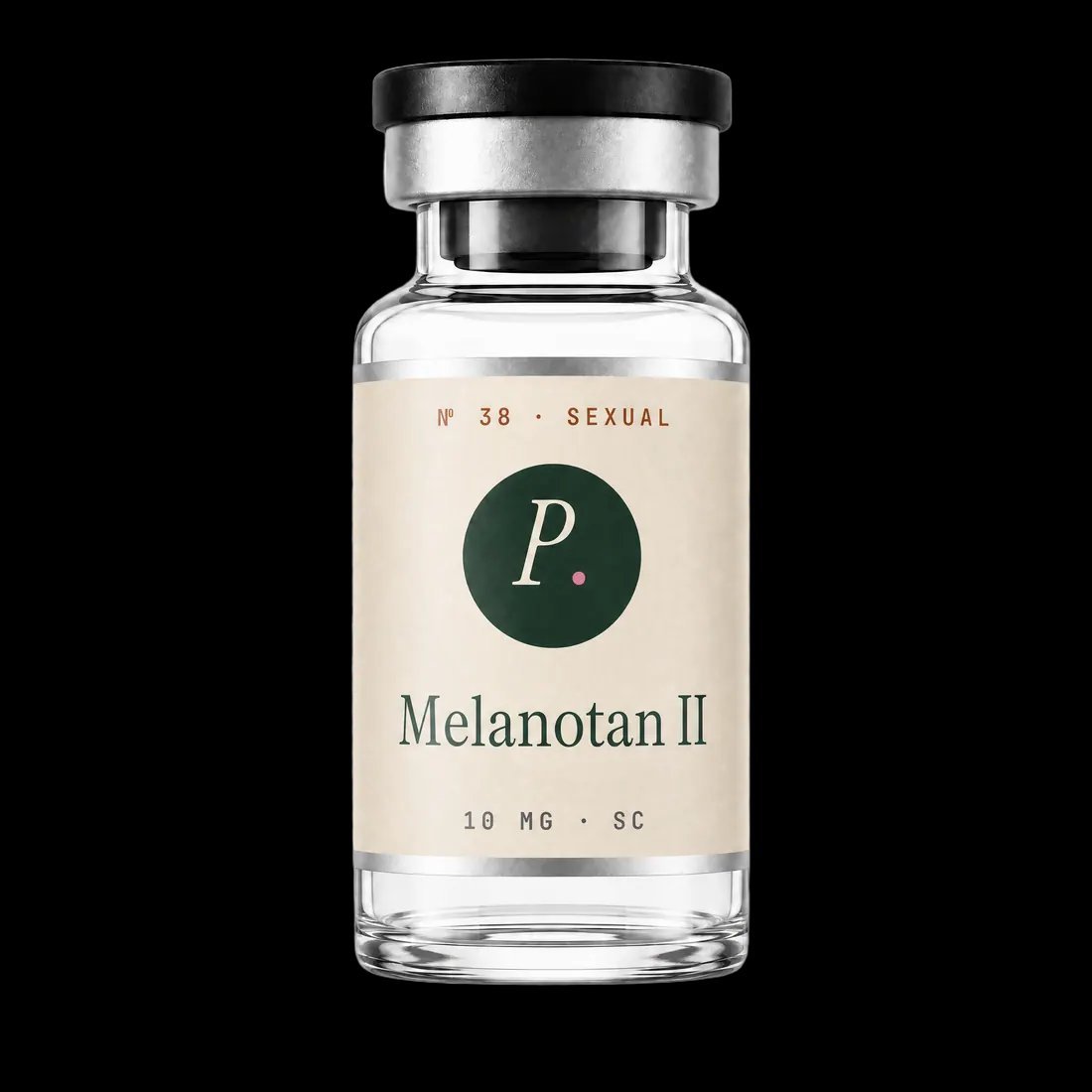
Description
Melanotan II: Product & Research Information
Melanotan II (MT-II) is a synthetic cyclic peptide analogue of alpha-melanocyte-stimulating hormone (α-MSH). It has been investigated for its interaction with melanocortin receptors, a family of receptors involved in skin pigmentation and several other physiological processes.
Melanotan II has attracted public attention because of its association with skin tanning and its effects on biological pathways beyond pigmentation. However, its investigational history should be distinguished from evidence of safety and effectiveness. Melanotan II is not an FDA-approved medicine, and its use as a tanning product has not been established as safe.
What Is Melanotan II?
Melanotan II is a synthetic peptide designed to mimic certain activities of α-MSH, a naturally occurring peptide involved in the regulation of melanin production.
Melanin is the pigment responsible for much of the color of human skin, hair, and eyes. Its production occurs in specialized skin cells called melanocytes. Melanocortin signaling participates in the biological processes that regulate pigmentation.
Melanotan II has been investigated as a nonselective melanocortin receptor agonist. This means it can interact with more than one receptor subtype, so its biological effects are not limited to skin pigmentation alone.
How Does Melanotan II Work?
Melanotan II interacts with melanocortin receptors, which are part of a signaling system involved in several physiological functions.
1. Melanocortin-1 Receptor and Pigmentation
The melanocortin-1 receptor (MC1R) is expressed in skin pigment cells and plays a central role in regulating melanin production.
Activation of this pathway can influence the type and amount of melanin produced. Although this mechanism helps explain scientific interest in Melanotan II, it does not establish that an unapproved product can produce predictable, safe, or uniform skin pigmentation.
2. Other Melanocortin Receptors
Melanocortin receptors are also involved in biological processes beyond pigmentation. Other receptor subtypes participate in pathways associated with appetite, energy balance, and sexual function.
Melanotan II‘s interaction with multiple receptors is important when interpreting research findings because an effect associated with one pathway does not establish the overall safety or effectiveness of the compound.
3. Why Receptor Selectivity Matters
A compound that activates multiple receptor subtypes can have a broader range of biological effects than one designed to act selectively on a single receptor.
For Melanotan II, this is a significant consideration in understanding both its research history and its potential risks. Receptor activity alone cannot establish a safe or effective use in humans.
Melanotan II and Skin Pigmentation Research
Scientific interest in Melanotan II has included the investigation of melanocortin signaling and its relationship to skin pigmentation. Early human studies were small, and the available evidence is insufficient to establish the safety and effectiveness of commercially marketed Melanotan II products.
Skin color and tanning responses are influenced by genetics, ultraviolet exposure, underlying skin conditions, and other factors. A change in pigmentation should not be interpreted as evidence of protection from ultraviolet radiation or as a substitute for established sun-protection measures.
Melanotan II is not an approved tanning treatment, and claims that it provides a safe alternative to sunlight or tanning beds are not supported by adequate clinical evidence.
Melanotan II and Other Physiological Research
Because Melanotan II can interact with multiple melanocortin receptor subtypes, research has also examined effects associated with physiological pathways beyond pigmentation.
Some early studies explored sexual-function-related effects. These investigations do not establish Melanotan II as an approved treatment for sexual dysfunction, nor do they demonstrate that products sold online have predictable effects or acceptable safety profiles.
Melanotan II should also not be confused with bremelanotide, a distinct medicine with its own clinical evidence and regulatory status. Approval of one compound does not confer approval on another.
Safety and Regulatory Considerations
Melanotan II is not FDA-approved for tanning, cosmetic enhancement, or any other therapeutic indication. Products sold online may have uncertain composition, purity, sterility, and manufacturing quality.
Potential concerns reported in association with unapproved Melanotan II products include nausea, flushing, changes in pigmentation, changes in moles or freckles, and more serious adverse events described in case reports. The available evidence does not allow the risks of all marketed products to be quantified reliably.
The absence of established safety data is particularly important when evaluating injectable or intranasal products obtained outside regulated medical channels. A product label, advertised purity percentage, or certificate of analysis does not by itself establish safety for human use.
Anyone experiencing a concerning reaction after using an unapproved tanning product should seek appropriate medical advice. New or changing pigmented lesions should be evaluated by a qualified healthcare professional.
Product Identity and Quality Documentation
When reviewing scientific information about Melanotan II, it is important to distinguish the identity claimed on a label from the verified characteristics of the material itself.
Relevant analytical information may include molecular identity, batch-specific analytical results, impurity characterization, and documentation describing the methods used for testing. Any claims about purity or independent laboratory analysis should be supported by authentic documentation.
Analytical results alone do not establish regulatory approval, clinical effectiveness, sterility, or suitability for human administration.
Conclusion
Melanotan II is a synthetic α-MSH analogue investigated for its interaction with melanocortin receptors involved in pigmentation and other physiological functions. Its biological activity has generated scientific and public interest, but limited clinical evidence and unresolved safety concerns are important limitations.
Understanding its mechanism, research history, product-quality uncertainties, and unapproved status provides a more reliable basis for evaluating claims about Melanotan II.
Important: This content is for educational and scientific information only. It is not medical advice, a recommendation to use Melanotan II, or evidence that any product marketed under this name is safe or effective for human use.



Reviews
There are no reviews yet.