Description
Selank 5 mg: Research & Product Information
Product Overview
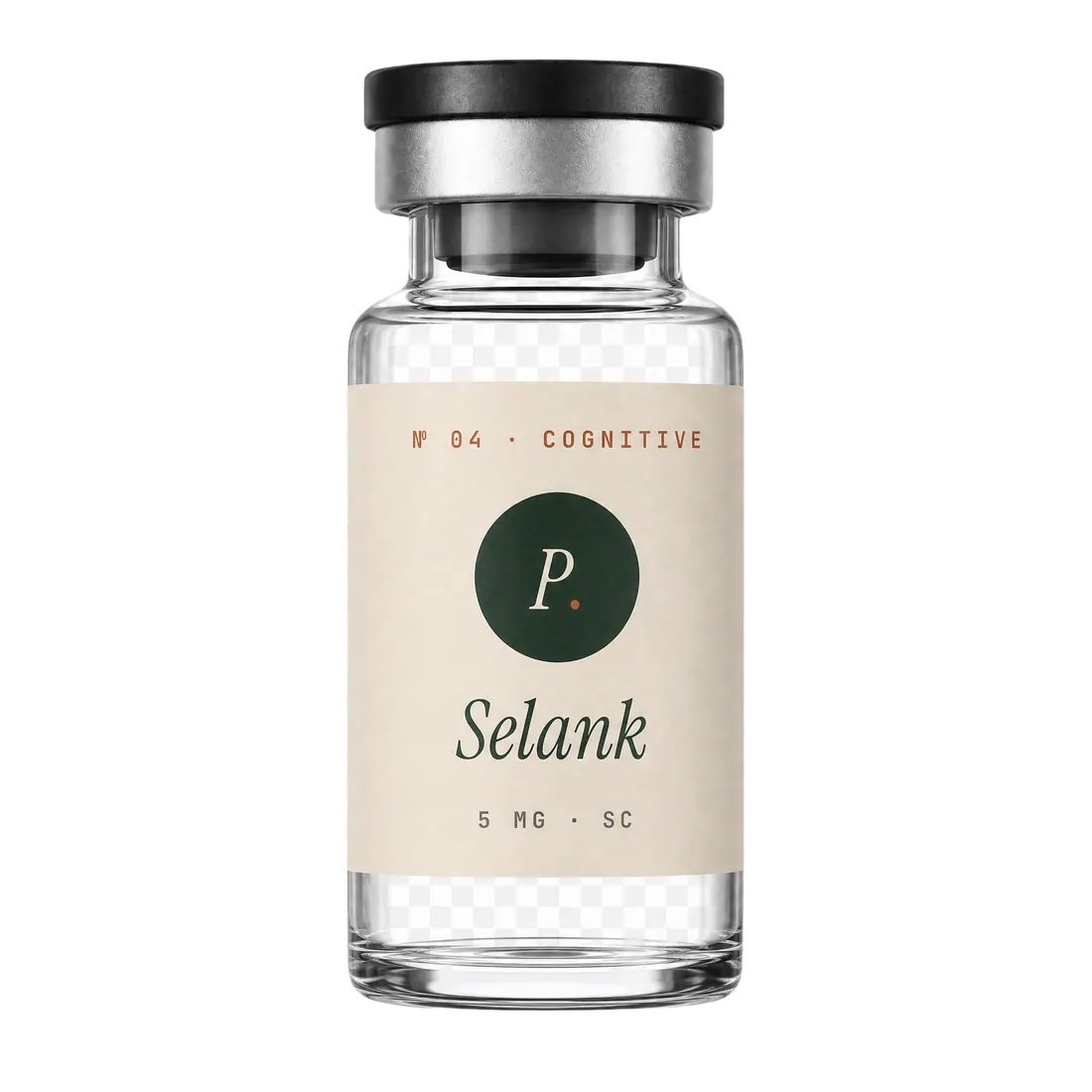
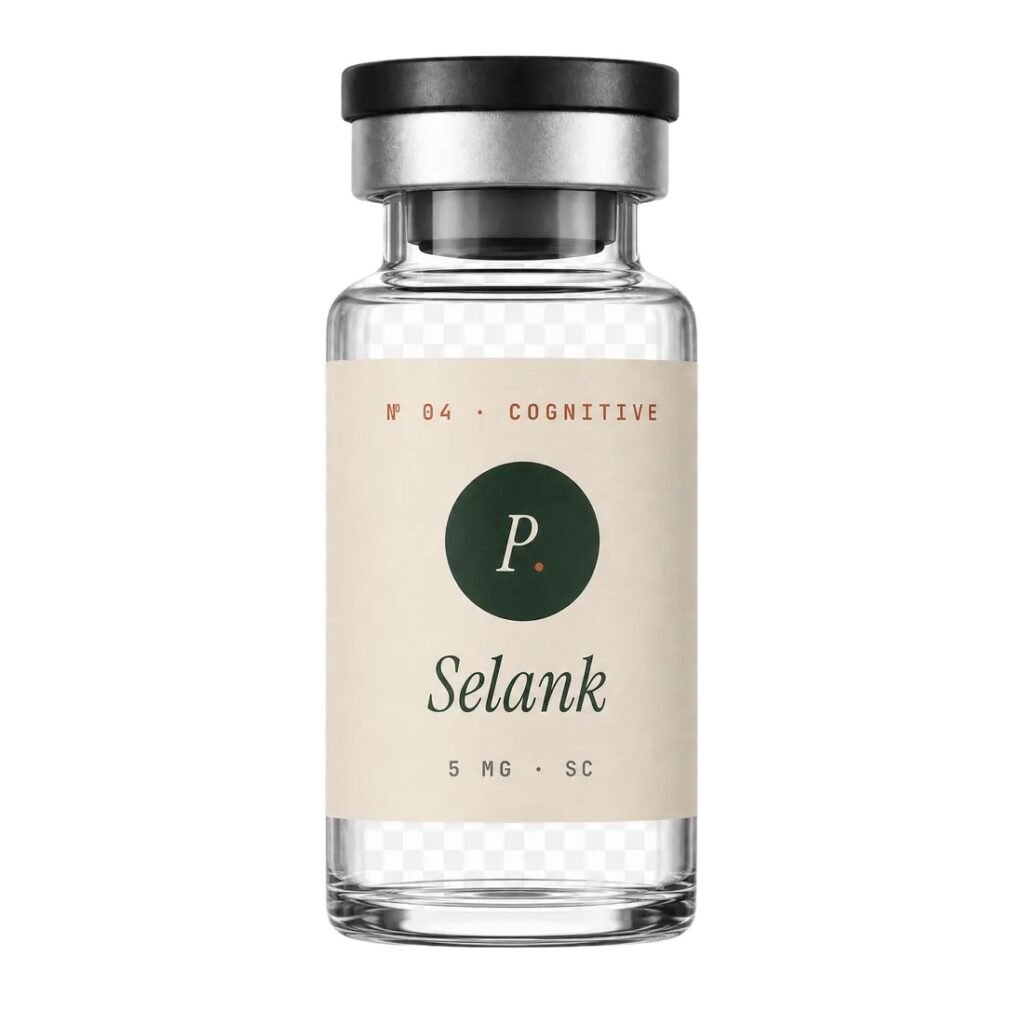
Selank 5 mg is a product listing identifying Selank, a synthetic heptapeptide related to tuftsin, a naturally occurring peptide fragment associated with immune biology. Selank has been investigated in experimental neuroscience and limited human research, particularly in studies involving anxiety-related conditions and behavioral responses.
Interest in Selank stems from its molecular structure and proposed effects on biological pathways associated with nervous-system signaling. However, research findings should be interpreted cautiously: evidence from laboratory experiments or small clinical studies does not establish that every product marketed as Selank is safe or effective, or that it provides a proven benefit for anxiety, stress, memory, or cognitive performance.
This page summarizes Selank’s molecular background, scientific research context, listed quantity, and product-quality considerations. It does not establish that the listed product is an approved medicine or suitable for human use.
What Is Selank?
Selank is a synthetic seven-amino-acid peptide commonly described as a tuftsin analogue. Its sequence is Thr-Lys-Pro-Arg-Pro-Gly-Pro, often abbreviated as TKPRPGP. Its structure incorporates a Pro-Gly-Pro sequence at the C-terminus, distinguishing it from tuftsin itself.
Selank was developed in Russia and has been investigated in research involving neurobiology, behavioral responses, and proposed anxiolytic activity. Its molecular relationship to tuftsin has also prompted investigation of immunological and other biological pathways.
A proposed mechanism, however, is not the same as an established clinical effect. Findings from animal experiments, cell-based studies, and human studies must be considered separately, and results obtained using one formulation cannot automatically be transferred to a different product.
Selank Research Background
Neurological and behavioral research
Experimental studies have examined Selank in relation to neuronal signaling and behavioral responses under stress-related conditions. These findings provide possible directions for further research but do not independently establish a clinical benefit.
Human research and anxiety-related outcomes
Some small human studies, primarily reported in Russian-language medical literature, have investigated Selank in people with anxiety-related disorders. For example, a 2008 study compared Selank with medazepam in 62 patients, while a 2014 study compared Selank with phenazepam in 60 patients.
These studies are part of the published literature, but they do not provide the same level of certainty as a large, independently replicated body of well-controlled clinical trials. Study design, reporting, population, formulation, and independent replication all affect how confidently results can be interpreted.
Accordingly, these findings should not be presented as proof that Selank is equivalent to established anxiety treatments, that it reliably improves cognition, or that it is appropriate for self-treatment.
Cognitive research
Selank is sometimes described in online marketing as a nootropic or cognitive-enhancement peptide. Although some research has explored neurological and behavioral outcomes, this terminology does not establish that Selank improves memory, attention, learning, or mental performance in healthy people.
Claims about cognitive enhancement should be supported by direct, appropriately designed human studies relevant to the specific product and intended use.
Listed Product Information
| Attribute | Listed information |
|---|---|
| Product name | Selank 5 mg |
| Identified compound | Selank |
| Listed quantity | 5 mg |
| Product category | Research-peptide information |
The 5 mg quantity is the amount stated in the product name. It is not a dosing recommendation, a verified concentration, or independent confirmation of the actual product contents.
The product name alone does not establish the precise chemical form, excipients, formulation, sterility, stability, intended route, or analytical quality. These characteristics require appropriate product-specific documentation.
Quality, Testing & Documentation
Clear quality documentation helps researchers determine what a product has been tested for and what the reported results actually establish.
Where available and applicable, relevant documentation may include:
- Identity testing: Analytical evidence supporting the identity of the material as Selank.
- Content analysis: Evidence supporting the stated quantity.
- Purity and impurity information: Results from appropriate analytical methods, including the methods’ limitations.
- Batch-specific documentation: A certificate of analysis (COA) linked to the actual batch or lot.
- Formulation information: Documentation identifying the chemical form and any other declared ingredients.
- Stability information: Product-specific evidence supporting any stated shelf life and storage conditions.
- Relevant microbiological testing: Where appropriate to the product and its intended classification, documentation addressing sterility and endotoxin status.
High-performance liquid chromatography (HPLC) can be used to separate and measure components in a sample. An HPLC result alone does not necessarily confirm complete molecular identity, sterility, endotoxin status, stability, or suitability for human administration.
Peptika should make claims about independent testing, purity percentages, or downloadable batch certificates only when current, verifiable documentation supports those statements. A general testing policy is not a substitute for evidence tied to the actual batch.
Safety & Regulatory Considerations
Selank should not be presented as an established treatment based solely on preliminary research, proposed mechanisms, or claims found in online product listings.
The US Food and Drug Administration (FDA) has identified potential immunogenicity concerns for compounded products containing Selank acetate, including concerns related to aggregation and peptide-related impurities. The FDA has also stated that important information about potential human safety issues is lacking in the relevant compounding context.
These concerns do not mean that every material sold under the Selank name is identical. They do mean that product identity, quality, formulation, and safety should not be assumed from the name or listed quantity alone.
Selank is not FDA-approved as a drug. Regulatory status varies by country and by specific formulation, so the status of a particular medicine in another jurisdiction should not be interpreted as approval of this product.
This page is informational and does not provide medical advice, dosing, reconstitution, injection, or self-administration instructions.
Frequently Asked Questions
What is Selank 5 mg?
Selank 5 mg is a product listing that identifies Selank, a synthetic heptapeptide related to tuftsin, with a stated quantity of 5 mg. The label quantity does not independently verify the product’s identity, purity, formulation, or quality.
What is Selank researched for?
Published research has explored Selank in neurological and behavioral contexts, including anxiety-related outcomes. The available evidence is limited, and findings from particular studies should not be treated as proof of broad clinical effectiveness.
Does Selank improve memory or focus?
The product name does not establish a cognitive benefit. Evidence from animal experiments or limited human studies cannot automatically establish improvements in memory, focus, learning, or mental performance in healthy individuals.
Is Selank FDA-approved?
No. Selank is not FDA-approved as a drug. The FDA has also identified potential safety concerns involving compounded Selank acetate. Regulatory status should be checked with the relevant authority for the specific product and jurisdiction.
Does a certificate of analysis prove that Selank is safe?
No. A COA supports only the conclusions justified by the sample and tests documented. It does not automatically establish clinical safety, effectiveness, sterility, or suitability for human use.
What does HPLC testing show?
HPLC is an analytical method used to separate and measure components in a sample. Its meaning depends on the method, reference standards, sample preparation, and results. It should not automatically be interpreted as proof of sterility or complete product quality.
Does the 5 mg label indicate a dose?
No. The listed quantity is product information, not a recommendation for use. This page does not provide dosing or administration guidance.
Does a product listing establish its intended route of administration?
No. The name and quantity alone do not establish the formulation or route. Those details must be supported by accurate product documentation and applicable regulatory authorization.
Conclusion
Selank 5 mg is a research-peptide listing involving a synthetic tuftsin analogue with a history of experimental investigation and limited human research. A credible product page should explain its scientific background, acknowledge the limits of the available evidence, and distinguish the stated quantity from verified product quality.
For Peptika Store, transparent documentation and accurate scientific language provide a more reliable foundation for customer trust than unsupported claims about anxiety relief, memory, focus, or cognitive enhancement.
Research-use disclaimer: This page is provided for informational and research-literacy purposes only. It is not medical advice and does not establish that the product is approved or suitable for human or veterinary use. Do not use this description as a guide to dosing, reconstitution, injection, or self-administration. Follow applicable laws, institutional requirements, and relevant safety procedures.

Reviews
There are no reviews yet.