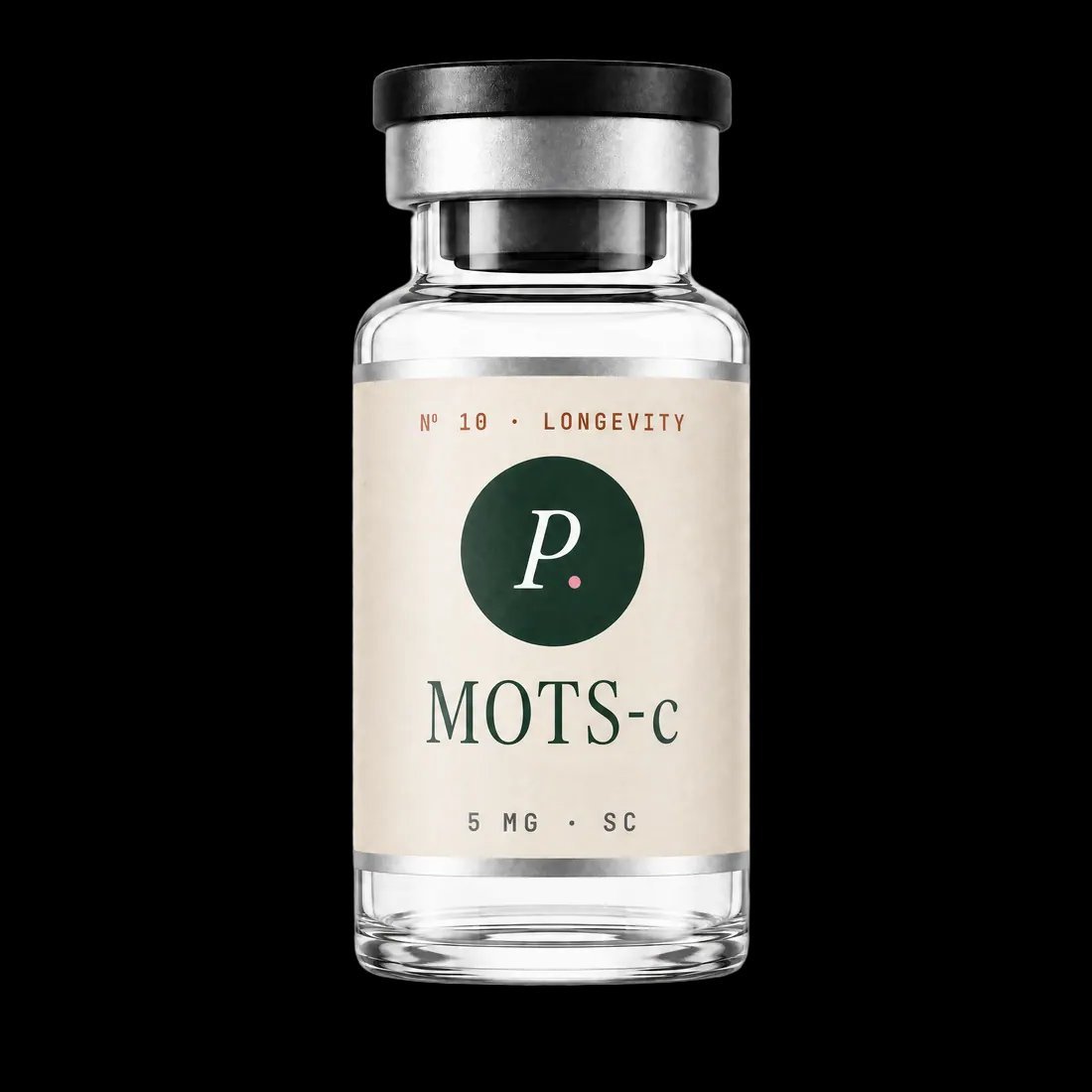
Description
MOTS-c Peptide: Research, Mechanism & Product Information
Overview of MOTS-c
MOTS-c is a mitochondria-derived peptide studied for its potential role in cellular energy regulation, metabolic signaling, and the body’s response to physiological stress. Unlike many peptides encoded by nuclear DNA, MOTS-c originates from a short open reading frame within the mitochondrial 12S ribosomal RNA gene.
Scientific interest in MOTS-c has grown because mitochondria play an essential role in energy production, cellular communication, and metabolic homeostasis. Researchers are investigating how MOTS-c may participate in signaling pathways associated with energy balance, exercise adaptation, and cellular stress responses.
Peptika provides product information designed to help customers understand the scientific background, research context, and documentation considerations associated with MOTS-c.
Important research note: MOTS-c remains an investigational research peptide. Its potential biological effects should not be interpreted as established clinical benefits, and human safety and efficacy have not been adequately established.
What Is MOTS-c?
MOTS-c stands for Mitochondrial Open Reading Frame of the 12S rRNA-c. It is a short peptide consisting of 16 amino acids that has attracted scientific attention because of its relationship with mitochondrial signaling and metabolic regulation.
Mitochondria are commonly recognized for their role in producing cellular energy. However, they also participate in signaling processes that help cells respond to changing energy demands and environmental stressors. MOTS-c is being investigated as one of the small peptides that may contribute to communication between mitochondria and other cellular systems.
Research to date has primarily involved laboratory experiments, cell models, and animal studies. Although these findings provide useful scientific context, they do not establish that administering MOTS-c produces the same effects in humans.
How Does MOTS-c Work?
Researchers have proposed several mechanisms through which MOTS-c may influence cellular activity.
1. AMPK and metabolic signaling
One major area of investigation involves AMP-activated protein kinase (AMPK), an enzyme that helps cells respond to changes in energy availability. AMPK participates in the regulation of energy metabolism and other processes involved in maintaining cellular balance.
Preclinical research suggests that MOTS-c may influence AMPK-related signaling, potentially through pathways involving folate metabolism and purine biosynthesis. However, its precise molecular targets and mechanisms remain incompletely understood.
2. Mitochondrial-to-nuclear communication
MOTS-c has also been studied for its ability to participate in mitochondrial-to-nuclear signaling. Under certain cellular stress conditions, researchers have observed MOTS-c moving into the nucleus, where it may influence the expression of genes associated with stress adaptation.
This process is relevant to research on how cells coordinate their responses to metabolic challenges. The significance of these findings for human health and for externally administered MOTS-c remains uncertain.
3. Exercise and cellular adaptation
Exercise is associated with changes in mitochondrial activity and the body’s signaling responses. Studies have investigated how naturally occurring MOTS-c levels may change following physical activity and how the peptide behaves in experimental models.
These findings make MOTS-c an interesting subject in exercise physiology and mitochondrial research. They do not demonstrate that a MOTS-c product can replace exercise or reliably improve human athletic performance.
MOTS-c Research Areas
Current research has explored several possible biological relationships:
- Cellular energy regulation: Investigating how MOTS-c interacts with pathways involved in energy sensing and metabolism.
- Glucose and insulin signaling: Examining possible relationships with metabolic regulation in experimental models.
- Exercise physiology: Studying the body’s natural MOTS-c response to physical activity and cellular stress.
- Mitochondrial communication: Exploring how mitochondria-derived peptides participate in broader cellular signaling.
- Aging-related research: Investigating changes in mitochondrial signaling and metabolic function associated with aging.
These are areas of scientific investigation, not proven indications for treatment. Results from animal or cell-based studies cannot establish the safety or effectiveness of MOTS-c in people.
MOTS-c and Other Research Peptides
MOTS-c belongs to the broader research area of peptide signaling and metabolic biology. Other compounds may be investigated in overlapping areas, but similarities in research interests do not mean that different peptides share the same mechanism, safety profile, or clinical effects.
For example:
- Humanin: Another mitochondria-derived peptide investigated in cellular protection and metabolic signaling research.
- 5-Amino-1MQ: A small molecule studied in connection with NNMT inhibition and metabolic pathways; it is not a peptide.
- AOD-9604: A modified peptide fragment studied in relation to growth-hormone-related biology and metabolism.
- Cagrilintide: An investigational amylin-receptor agonist studied in metabolic research.
Each compound has a distinct scientific profile and evidence base. None should be considered interchangeable with MOTS-c.
Product Quality and Documentation
For research products, clear identification and appropriate quality documentation are important. Customers should review the documentation actually available for the specific product rather than relying on general claims about peptide quality.
Relevant documentation may include:
- Identity testing: Evidence supporting the identity of the stated compound.
- Purity analysis: Analytical results describing the measured purity and relevant impurities.
- Batch-specific documentation: Records that correspond to the particular batch being supplied.
- Storage and stability information: Product-specific information supported by the supplier or manufacturer.
- Formulation details: Clear identification of the chemical form supplied, including whether the material is the free-base form or an acetate salt, where applicable.
A certificate of analysis (CoA) should be reviewed for its scope, testing methods, batch identification, and results. A CoA alone does not establish that a product is sterile, suitable for injection, safe for human use, or approved by a regulator.
Peptika should only make claims about testing, purity, identity, or other quality attributes when supported by documentation for the product being offered.
Safety and Regulatory Considerations
MOTS-c should not be presented as an established treatment for weight management, diabetes, insulin resistance, aging, or athletic performance.
In its July 2026 evaluation of MOTS-c-related substances proposed for use in compounding, the U.S. Food and Drug Administration (FDA) identified a lack of human exposure data, clinical safety information, and evidence sufficient to evaluate effectiveness for the proposed uses. The FDA also raised concerns about potential immunogenicity and uncertainties involving peptide impurities and aggregation.
The FDA proposed that MOTS-c free base and MOTS-c acetate not be included on its Section 503A Bulks List. This is a specific U.S. compounding-related regulatory determination, not a universal statement about every country’s laws. Product classification and lawful sale depend on the relevant jurisdiction and intended use.
Injectable-product caution: Research involving naturally occurring MOTS-c or animal models does not establish that an externally administered MOTS-c formulation is safe. Research-grade material should not be assumed to be sterile, injectable-grade, or appropriate for human administration. Do not use a research product as a substitute for professional medical advice or an approved treatment.
Frequently Asked Questions About MOTS-c
What is MOTS-c peptide?
MOTS-c is a 16-amino-acid mitochondria-derived peptide studied for its possible role in cellular energy regulation, mitochondrial signaling, and metabolic stress responses.
What is MOTS-c studied for?
Research has explored its relationships with AMPK-related signaling, energy metabolism, exercise adaptation, glucose regulation, and aging-related biology. Most evidence comes from preclinical research, so these areas should not be described as established therapeutic benefits.
Does MOTS-c help with weight loss?
MOTS-c has been investigated in experimental models involving metabolism and body-weight regulation. These findings do not establish that it causes weight loss in humans, and it should not be marketed as a proven weight-loss treatment.
Is MOTS-c approved for human use?
Regulatory status depends on the jurisdiction and product. MOTS-c peptide should not be represented as an FDA-approved drug. In its July 2026 compounding evaluation, the FDA noted that MOTS-c free base and MOTS-c acetate were not components of an FDA-approved drug and proposed that they not be included on the Section 503A Bulks List.
Is MOTS-c safe for injection?
Human safety data are insufficient to establish the safety of administered MOTS-c. The FDA has identified concerns involving potential immunogenicity and uncertainties about product characterization and impurities. A product labelled for research use should not be assumed suitable for injection.
Are there human clinical studies proving MOTS-c works?
Human studies have investigated naturally occurring MOTS-c levels in contexts such as exercise. Measuring the peptide naturally present in the body is different from administering a MOTS-c product. Available evidence does not establish the safety and effectiveness of administered MOTS-c as a treatment.
What should I check before evaluating a MOTS-c research product?
Review the product’s identity, chemical form, batch-specific analytical documentation, purity results, storage information, and applicable legal status. Claims about sterility or suitability for a particular route of administration require specific supporting evidence.
Conclusion
MOTS-c is an emerging subject in mitochondrial and metabolic research, with scientific interest centered on energy signaling, cellular stress responses, and exercise-related adaptation. Its proposed mechanisms offer opportunities for further investigation, but substantial questions remain about its biological effects, pharmacology, and safety when administered externally.
Peptika aims to present clear, responsible product information that distinguishes established scientific findings from preliminary research. Customers should assess the documentation available for the specific product and recognize that research interest alone does not establish clinical effectiveness or suitability for human use.
Disclaimer: This content is provided for general educational and scientific research information only. It is not medical advice and does not diagnose, treat, cure, or prevent any disease. MOTS-c is an investigational peptide, and its safety and effectiveness for human use have not been established. Product availability, classification, and permitted uses vary by jurisdiction. Always consult qualified professionals and verify applicable regulatory requirements before making decisions involving research materials.

Reviews
There are no reviews yet.