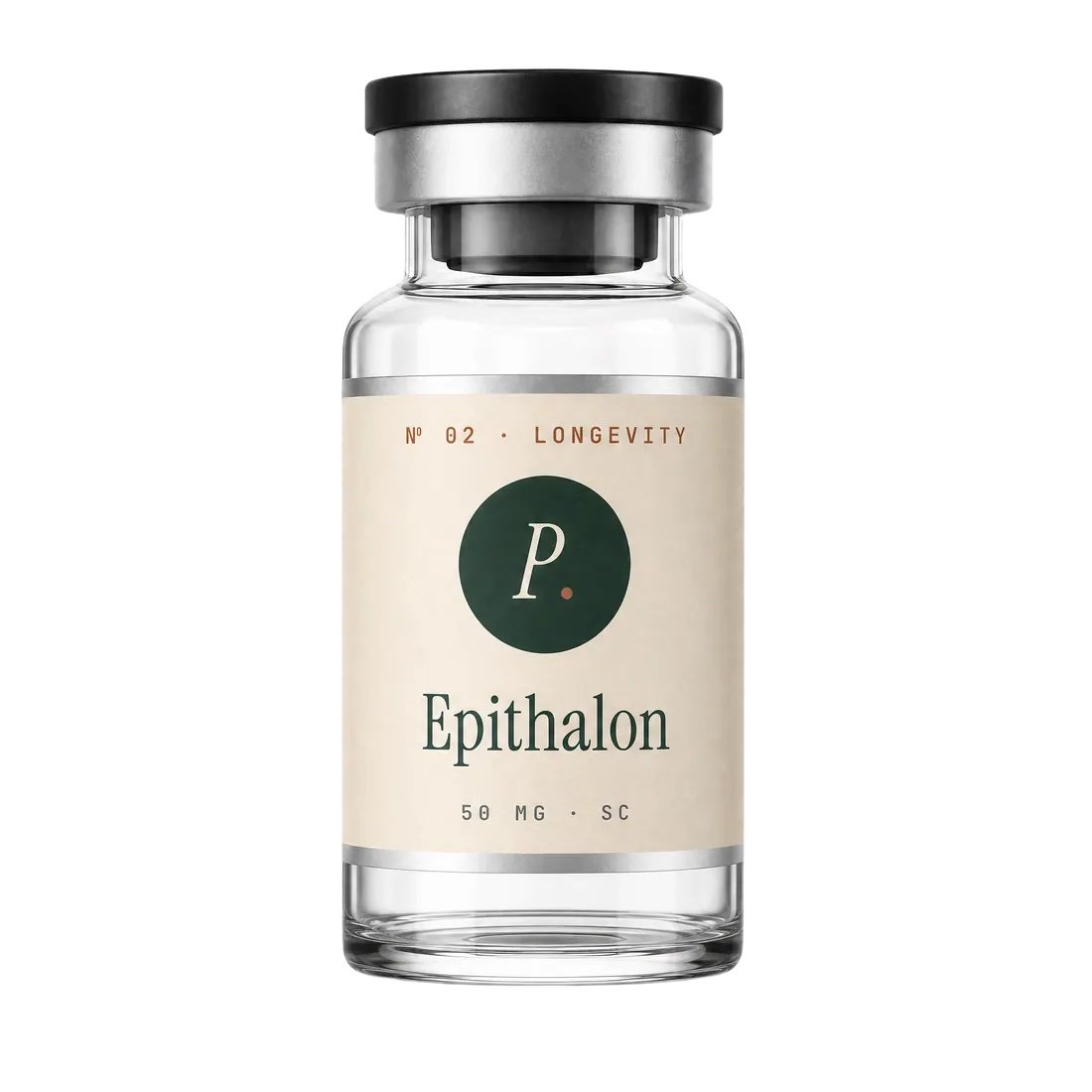
Description
Epithalon: Longevity Research Peptide & Product Information
Product Overview
Epithalon, also known as Epitalon or AEDG, is a synthetic tetrapeptide composed of four amino acids: alanine, glutamic acid, aspartic acid, and glycine. It has attracted scientific interest for its reported effects on biological pathways associated with cellular aging, telomere maintenance, and circadian regulation.
Originally developed through research inspired by epithalamin, a pineal-derived polypeptide preparation, Epithalon is a chemically defined synthetic peptide—not a pineal gland extract. This distinction matters when comparing scientific studies, verifying product identity, and assessing the relevance of published findings.
What Is Epithalon?
Epithalon is a short peptide consisting of four amino acids arranged in the sequence Ala-Glu-Asp-Gly (AEDG). It is commonly associated with research into the pineal gland, a small endocrine structure involved in regulating circadian rhythms and producing melatonin.
The compound is often discussed in three related areas of scientific investigation:
- Telomere biology: Research into the structures at chromosome ends and the mechanisms that maintain them.
- Circadian regulation: Studies examining biological rhythms and melatonin-related physiological markers.
- Cellular aging: Laboratory investigations into pathways associated with oxidative stress and age-related cellular changes.
These areas help explain why Epithalon receives attention in longevity research.
Epithalon and Telomere Research
Telomeres are protective structures at the ends of chromosomes. Their length and maintenance are studied in connection with cellular division, aging, and certain diseases. Telomerase is an enzyme that can maintain or extend telomeres in some cells.
Some laboratory studies have reported that it may influence telomere-related pathways. These findings have contributed to interest in the peptide among researchers investigating cellular aging.
It is important to distinguish this research from a proven anti-aging effect. Telomere length is not a standalone measure of overall health or biological age, and altering telomere-maintenance pathways does not automatically produce a beneficial outcome. Telomerase activity also has complex relationships with cancer biology.
Epithalon and Circadian Rhythm Research
Epithalon has also been investigated in relation to circadian biology and melatonin-associated markers. Circadian rhythms are biological processes that follow approximately 24-hour cycles and influence sleep-wake timing, hormone patterns, and other physiological functions.
A small body of human research has examined physiological markers associated with circadian regulation. These studies are limited, and changes in a laboratory measurement should not be interpreted as proof that a product treats insomnia, improves sleep quality, or corrects a circadian rhythm disorder.
It is not melatonin, and evidence about melatonin itself should not be automatically applied to Epithalon.
Why Is Epithalon of Interest in Longevity Research?
It sits at the intersection of several research topics: telomere maintenance, cellular aging, and circadian regulation. Researchers are interested in whether these biological pathways can help explain age-associated changes and whether they may eventually inform future therapeutic investigations.
For a scientifically informed evaluation, three distinctions are especially useful:
- Mechanistic research: Investigates how a compound may interact with biological pathways.
- Preclinical research: Examines effects in laboratory systems or animal models.
- Clinical evidence: Assesses outcomes in people, with stronger conclusions generally requiring well-designed and independently replicated clinical trials.
Research Status and Regulatory Context
It remains investigational as a proposed longevity or anti-aging intervention. The US Food and Drug Administration’s July 2026 briefing evaluated it free base and It acetate in the context of possible inclusion on the list of bulk drug substances that may be used in certain compounded preparations.
Frequently Asked Questions About Epithalon
What is Epithalon?
It is a synthetic tetrapeptide commonly identified by the amino-acid sequence Ala-Glu-Asp-Gly (AEDG). It has been studied in connection with telomere biology, circadian regulation, and cellular-aging pathways.
Is Epithalon the same as Epitalon?
Yes. Epithalon and Epitalon are commonly used alternative spellings for the synthetic tetrapeptide AEDG. When evaluating a particular product, the exact chemical form and supporting documentation should still be checked.
Is Epithalon the same as Epithalamin?
No. It is a synthetic tetrapeptide developed from research into the amino-acid composition of Epithalamin. Epithalamin is a chemically distinct pineal-derived polypeptide preparation. Findings from studies of one should not automatically be treated as evidence for the other.
Does Epithalon lengthen telomeres?
Some laboratory research has reported effects on telomere-related pathways. However, current evidence does not establish a reliable, safe, clinically meaningful telomere-lengthening effect in humans or demonstrate that it extends human lifespan.
Has Epithalon been studied in humans?
A limited number of human studies have examined physiological or circadian-related markers, and older research has explored a potential clinical application in retinitis pigmentosa.
Conclusion
Epithalon is a synthetic tetrapeptide with a distinctive research profile spanning telomere biology, circadian regulation, and cellular-aging pathways. These topics help explain its prominence in longevity research.


Reviews
There are no reviews yet.