Description
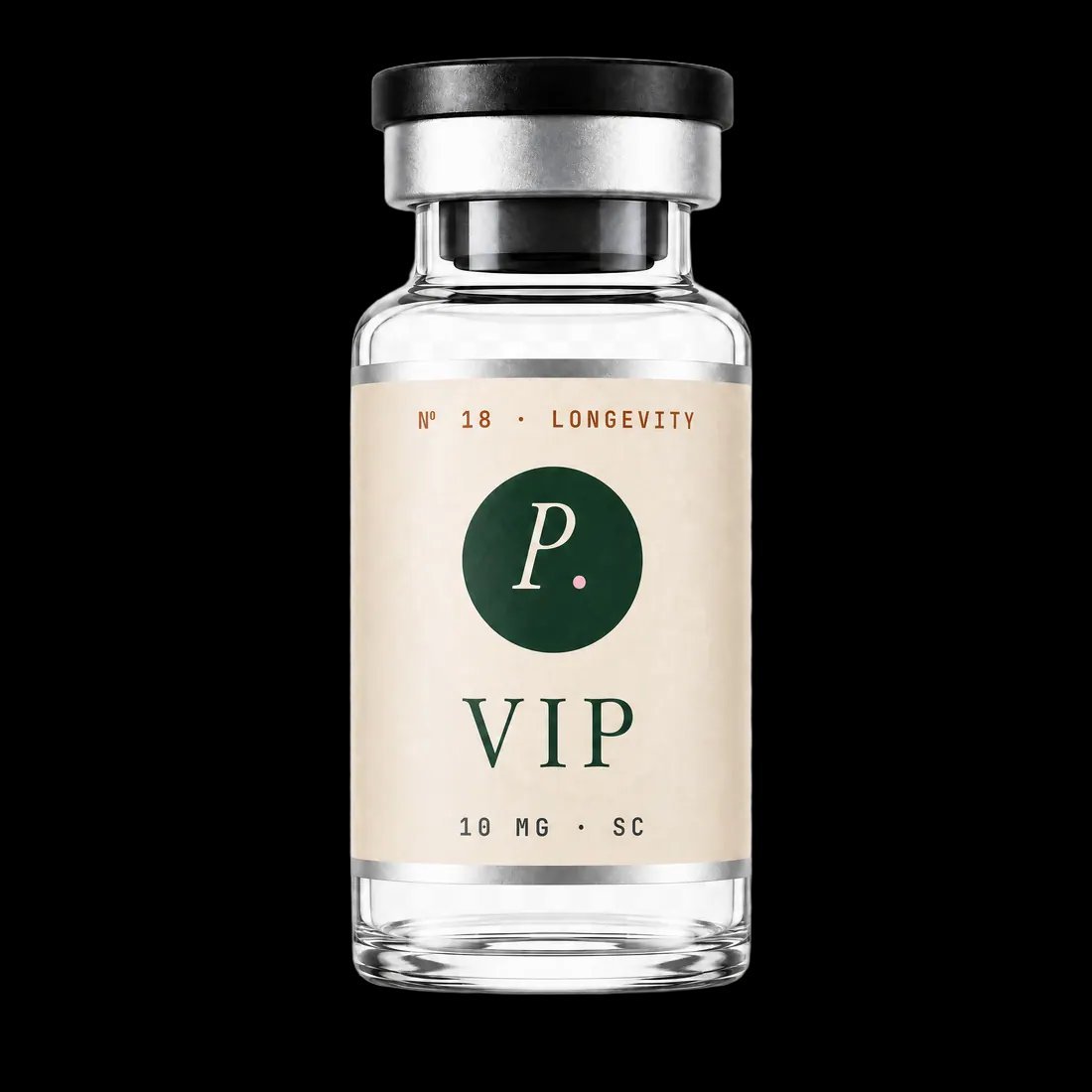
VIP (Vasoactive Intestinal Peptide): Product & Research Information
Overview
Vasoactive intestinal peptide (VIP) is a naturally occurring 28-amino-acid neuropeptide involved in communication between the nervous system and multiple organs. It participates in physiological processes related to blood-vessel dilation, gastrointestinal function, hormone secretion, and immune signaling.
VIP has attracted scientific interest because of its interaction with specific cell-surface receptors and its broad biological activity. Researchers continue to investigate these pathways to better understand their roles in normal physiology and disease.
However, the fact that VIP has important biological functions does not mean that a VIP product has proven therapeutic benefits. Research findings should not be interpreted as evidence that commercially marketed VIP products safely or effectively treat inflammation, respiratory conditions, neurological disorders, digestive problems, or other diseases.
Understanding VIP and Its Mechanism of Action
VIP acts primarily through two receptors known as VPAC1 and VPAC2. These receptors belong to the G-protein-coupled receptor family and are involved in transmitting signals inside cells.
Activation of these receptors can influence intracellular signaling pathways, including cyclic adenosine monophosphate (cAMP). Depending on the tissue and biological context, VIP signaling can affect vascular tone, gastrointestinal secretions, smooth-muscle activity, endocrine functions, and immune responses.
VIP is therefore studied across several areas of physiology rather than as a compound with a single, simple biological effect. Responses may differ depending on receptor distribution, tissue type, exposure, and the formulation being investigated.
VIP Research and Scientific Context
Published research has explored VIP’s role in gastrointestinal physiology, cardiovascular regulation, neurobiology, and immune signaling. Reviews have also discussed potential therapeutic applications of VIP and related compounds.
Despite this broad research interest, translating VIP’s biological activity into a safe and effective treatment presents significant challenges. Research literature has highlighted issues such as its short metabolic stability and difficulties delivering the peptide to the intended site of action.
Evidence from laboratory experiments, animal studies, and mechanistic research should be distinguished from evidence obtained through well-designed human clinical trials. A biological effect observed in one setting does not establish clinical effectiveness in another.
For this reason, claims that VIP products provide reliable anti-inflammatory, immune-supporting, respiratory, neurological, or gastrointestinal benefits should not be made without appropriate clinical evidence for the specific product and intended use.
VIP and Related Peptides
VIP belongs to a broader family of peptide signaling molecules that includes pituitary adenylate cyclase-activating polypeptide (PACAP). VIP and PACAP have related biological properties, but they are distinct peptides and interact differently with receptor subtypes.
VIP should also not be confused with other peptides commonly discussed in research catalogs, such as CJC-1295, Sermorelin, or Ipamorelin. These compounds have different structures, mechanisms, and research histories.
Evidence concerning one peptide cannot automatically be used to support claims about another. Likewise, combining peptides should not be presented as proven to improve effectiveness or safety without suitable evidence for the exact combination.
Quality and Product Documentation
Accurate product identification and transparent documentation are important when evaluating peptide-related materials. Depending on the product and supplier, relevant documentation may include:
- Product identity and stated composition
- Batch or lot identification
- Analytical testing records, where available
- Purity and impurity information supported by appropriate analytical methods
- Manufacturer-supplied storage and handling information
- Applicable research-use, safety, and regulatory disclosures
Documentation should correspond to the actual product and batch. A general certificate or an unsupported purity claim does not independently establish identity, sterility, safety, or suitability for human use.
Claims such as “pharmaceutical grade,” “sterile,” or “independently tested” should only be used when accurate and supported by appropriate documentation for the specific product.
Important Safety and Regulatory Information
VIP has physiological effects that include vasodilation and changes in gastrointestinal secretion. These effects make its safety profile important to consider; they should not be interpreted as evidence that an externally administered VIP product is safe or appropriate for unsupervised use.
The U.S. Food and Drug Administration has reviewed VIP in the context of proposed use as a bulk substance for compounding and identified concerns relevant to its characterization, safety, and evidence base. A substance’s presence in scientific literature or its availability from a supplier does not mean that a particular product is FDA-approved.
Regulatory status depends on the specific product, formulation, intended use, and jurisdiction. Buyers and researchers should verify the applicable requirements rather than assuming that a product is an approved medicine.
This page does not provide dosing, reconstitution, administration, or self-treatment instructions. Anyone considering a substance that may affect vascular, gastrointestinal, or other physiological systems should consult an appropriately qualified healthcare professional.
Frequently Asked Questions About VIP
What is VIP (Vasoactive Intestinal Peptide)?
VIP is a naturally occurring 28-amino-acid neuropeptide involved in several physiological processes, including blood-vessel dilation, gastrointestinal function, hormone signaling, and immune regulation.
How does VIP work?
VIP primarily interacts with VPAC1 and VPAC2 receptors, which transmit signals inside cells. These pathways influence different functions depending on the tissue and biological context.
Is VIP FDA-approved?
VIP should not be assumed to be an FDA-approved medicine. The FDA has reviewed VIP in the context of bulk substances proposed for compounding and raised concerns. The regulatory status of any specific product must be verified independently.
Is VIP an anti-inflammatory treatment?
VIP has been investigated for its role in immune and inflammatory signaling. However, mechanistic findings and preclinical studies do not establish that a commercially marketed VIP product is a safe and effective treatment for inflammatory disease.
Is VIP the same as PACAP?
No. VIP and PACAP are related neuropeptides, but they are distinct molecules with different receptor preferences and biological properties. Research findings for one should not automatically be applied to the other.
What should be checked in VIP product documentation?
Review the stated identity, composition, batch information, and available analytical records. Documentation should relate to the actual product and batch. Purity information alone does not establish sterility, safety, regulatory approval, or suitability for human use.
Conclusion
VIP is an important subject in peptide research because of its broad role in receptor-mediated signaling across the cardiovascular, gastrointestinal, nervous, and immune systems. Its biological complexity also makes careful interpretation of research and safety information essential.
Peptika aims to provide clear product information that distinguishes established scientific findings from experimental possibilities and unsupported marketing claims. Product identity, available documentation, and applicable regulatory requirements should be reviewed before any research or purchasing decision.
Disclaimer: This page is for general educational and product-information purposes only. It does not claim that VIP diagnoses, treats, cures, or prevents any disease. Research findings are not a recommendation for personal use. Follow applicable laws and product-specific restrictions.

Reviews
There are no reviews yet.